Oil Change Service Explained: How It Works, What Is Included, and How to Get the Best Value
Oil Change Service Explained: How It Works, What Is Included, and How to Get the Best Value
An oil change service is one of the most important routine maintenance tasks for any vehicle. Engine oil lubricates moving parts, reduces heat, helps clean internal components, and protects the engine from premature wear. When the oil becomes dirty or breaks down over time, that protection weakens, which can affect performance, reliability, and long-term engine life.
This article explains how an oil change service works, what is usually included in the package, and how to make sure you get the best value for your money. Keep in mind that the exact details can vary depending on your vehicle, the type of oil it requires, and the shop you choose. Understanding the basics will help you compare services confidently and avoid paying for things you do not need.
What an Oil Change Service Actually Does
The core purpose of an oil change service is simple: remove the old engine oil and replace it with fresh oil that meets your vehicle’s specifications. Over time, oil collects dirt, fuel residue, moisture, and tiny metal particles from normal engine operation. Even if the oil still looks acceptable, its protective properties gradually decrease.
Fresh oil helps maintain proper lubrication between moving parts, supports engine cooling, and reduces friction that can lead to wear. In many cases, the oil filter is replaced at the same time because a new filter helps keep the fresh oil cleaner for longer. Many shops also include a quick visual inspection to check for obvious issues such as leaks or worn components.
In other words, an oil change service is not just about draining and refilling. It is a basic preventive maintenance step designed to keep your engine running efficiently and to catch small problems before they become expensive repairs.
What Is Usually Included in an Oil Change Service
While service menus can differ, most standard packages include a few common elements. The goal is to replace degraded oil, support engine protection, and provide a basic check of the vehicle’s condition. Here is what is typically part of a professional oil change service.

Engine Oil Replacement
The main part of the service is draining the old engine oil and refilling the engine with the correct type and grade of new oil. The shop should match the oil to the manufacturer’s recommendation whenever possible. That recommendation may specify conventional oil, synthetic blend, or full synthetic oil, along with the proper viscosity grade such as 0W-20, 5W-30, or another grade designed for your engine.
Using the correct oil matters because different engines are built with different clearances, heat tolerances, and performance requirements. The wrong oil type may not provide the right level of protection, especially in modern engines that rely on precise lubrication.
Oil Filter Replacement
The oil filter is designed to trap contaminants as oil circulates through the engine. If the filter becomes clogged or saturated, it cannot do its job effectively. That is why most oil change service packages include a new filter. Installing a fresh filter helps protect the newly added oil from early contamination and supports cleaner engine operation.
Some vehicles use traditional spin-on filters, while others use cartridge-style filters. The filter type can affect the price and labor time, so it is worth confirming what is included before approving the service.
Basic Vehicle Inspection
Many shops provide a basic inspection as part of the oil change service. This is usually not a full diagnostic evaluation, but it can still be useful. Common checks may include looking for leaks around the engine area, checking visible fluid levels, inspecting tire condition, and examining belts or other accessible wear points.
A quick visual inspection can help identify issues early. For example, a technician might notice an oil leak, low coolant level, uneven tire wear, or a damaged hose. Catching these concerns early can save money and reduce the risk of a breakdown later.
Service Reminder Reset
Many newer vehicles have an oil life monitor or maintenance light that alerts the driver when service is due. A good oil change service often includes resetting this reminder after the work is completed. This matters because it helps you track the next interval correctly and prevents confusion about whether the service has already been performed.
If the reminder is not reset, you may continue to see the warning even after the oil has been changed. That can create uncertainty and make it harder to maintain a proper service schedule.
Step by Step: How the Service Works
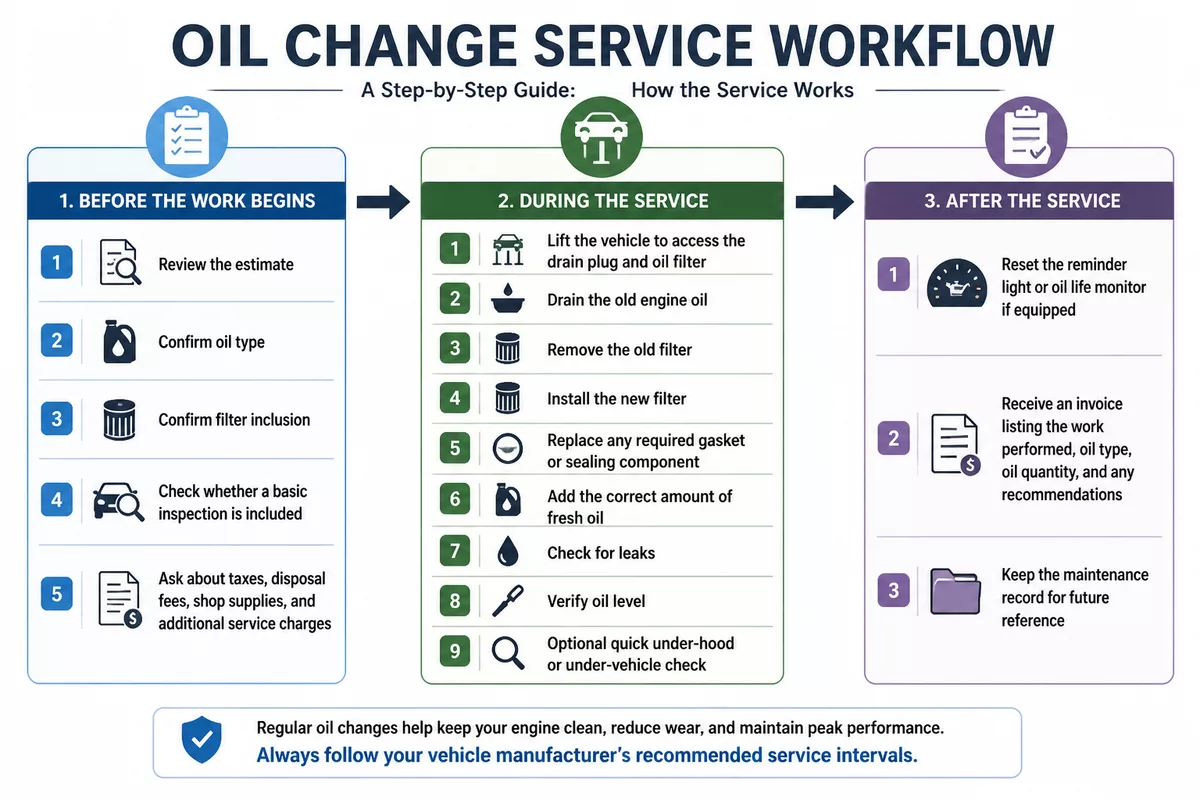
If you have never booked an oil change service before, the process may seem straightforward, but knowing the typical steps can help you understand what you are paying for. The workflow usually follows a simple sequence from estimate to completion.
Before the Work Begins
The first step is usually reviewing the estimate. This is the best time to confirm the oil type, the filter inclusion, and whether a basic inspection is part of the package. If your vehicle needs synthetic oil or a special filter, the cost may be higher than a basic standard-oil service.
Before approving anything, ask whether the quoted price includes taxes, disposal fees, shop supplies, or additional service charges. A clear estimate makes it easier to compare offers and avoid surprises at checkout.
During the Service
Once the service begins, the technician may lift the vehicle to access the drain plug and oil filter. The old oil is drained from the engine, and the old filter is removed. If the filter is in a difficult-to-reach location, this may take extra time and labor.
After draining, the technician installs the new filter, replaces any required gasket or sealing component, and adds the correct amount of fresh oil. The engine is then checked for leaks, and the oil level is verified to make sure it is within the proper range.
Depending on the shop, the technician may also perform a quick under-hood or under-vehicle check. This can include looking at belts, hoses, fluid reservoirs, tire condition, and visible signs of wear or seepage.
After the Service
Once the oil change service is complete, the reminder light or oil life monitor should be reset if your vehicle has one. You should also receive an invoice listing the work performed, the type and quantity of oil used, and any additional recommendations.
Keep the maintenance record for future reference. This is helpful if you need to track service intervals, prove regular maintenance for a warranty claim, or simply keep a history of work done on the vehicle.
What Is Not Always Included
One of the biggest mistakes drivers make is assuming every oil change service package includes the same items. In reality, some shops offer a basic oil-only service, while others bundle in extra checks or recommended maintenance. It is important to know what is not automatically part of the price.
- Air filter replacement: Often sold separately and not included in a standard oil change service.
- Cabin filter replacement: Usually treated as a separate maintenance item.
- Tire rotation: May be available as an add-on rather than part of the base package.
- Fluid top-ups: Some shops perform a basic check, but extensive topping off is not always included.
- Full diagnostic scan: A scan tool check is not guaranteed unless the shop specifically states it.
- Synthetic oil upgrades: If the quoted package covers standard oil only, synthetic may cost extra.
If something matters to you, ask about it before approving the service. A package that looks cheaper at first may not offer better value if it excludes the items your car actually needs.
How Often You Should Get an Oil Change
There is no single interval that works for every car. The right schedule depends on your engine, the oil type you use, your driving habits, and the manufacturer’s recommendations. The owner’s manual is the most reliable source for interval guidance.
Mileage and Time Intervals
Many drivers focus only on mileage, but time matters too. Even if you do not drive very far, oil can still age, absorb moisture, and lose effectiveness. That is why manufacturers often recommend changes based on either miles driven or months elapsed, whichever comes first.
For example, a vehicle might be due for service every 5,000 to 10,000 miles depending on oil type and engine design, but the exact interval should always come from the owner manual or maintenance monitor. Following the manufacturer’s schedule is one of the best ways to protect engine life.
Driving Conditions That Can Shorten the Interval
Certain driving habits and environments can stress oil more quickly. If you drive in severe conditions, you may need more frequent oil change service than a vehicle used mainly for easy highway travel.
- Frequent short trips: The engine may not reach full operating temperature often enough to burn off moisture and contamination.
- Stop-and-go traffic: Constant idling and low-speed operation can increase heat and wear.
- Towing or heavy loads: Extra engine strain can break down oil faster.
- Extreme heat or cold: Temperature extremes can affect oil performance and startup protection.
- Dusty roads or severe driving conditions: More contaminants can enter the system or build up faster.
If your driving pattern matches any of these conditions, it is smart to follow a more conservative maintenance schedule and check the manual’s severe-service recommendation if available.
Signs Your Car May Need an Oil Change
Your vehicle often gives warning signs when maintenance is overdue. Some are obvious, while others are subtle. Paying attention early can help prevent damage and avoid unnecessary stress on the engine.
- Oil change or maintenance light: A reminder that service is due based on time, mileage, or calculated oil life.
- Oil pressure warning light: This is more serious and should be treated as a potential emergency.
- Loud engine noise: Increased ticking, knocking, or rough operation may indicate poor lubrication.
- Dark, dirty, or low oil: If inspected, the oil may look contaminated or be below the proper level.
- Burning smell or visible leaks: These can point to oil leaking onto hot engine parts or other problems.
- Overdue maintenance reminder: If the recommended interval has passed, service should not be delayed.
If a warning light appears, it is important to understand what kind of light it is. A maintenance reminder usually means service is due soon, while an oil pressure warning may indicate a more urgent mechanical issue that requires immediate attention.
How to Choose the Right Service Package
Getting the best value from an oil change service is not always about finding the cheapest price. The best package is the one that matches your vehicle’s needs, includes the right materials, and avoids hidden charges. Comparing quotes carefully can make a big difference.
Compare the Quote Carefully
Before booking, check the oil type, filter inclusion, and inspection items listed on the estimate. Make sure you understand exactly what is covered. If the package is priced low but excludes a necessary filter or uses a lower-grade oil than your vehicle requires, it may not actually be the best value.
Also look for extra fees before approving the work. Disposal fees, shop supplies, and vehicle-specific part charges can add up quickly. A transparent estimate is a sign of a trustworthy provider.
Decide Between Service Providers
There are usually three common options: dealership service, independent repair shops, and quick lube centers. Each has pros and cons.
- Dealership service: Often ideal for newer vehicles, warranty concerns, or brand-specific procedures, but may be more expensive.
- Independent repair shop: Can offer a good balance of price, expertise, and personalized service.
- Quick lube center: Convenient and fast, but service quality and package detail can vary widely, so confirmation is important.
The best choice depends on your priorities. If convenience matters most, a quick lube may work. If you want a more detailed inspection or brand-specific care, a dealership or reputable independent shop may be better.
Choose the Right Oil for Your Car
The right oil choice is essential. Conventional oil may still be appropriate for some older or simpler engines, especially when the manufacturer allows it. A synthetic blend can provide a middle-ground option with improved protection. Full synthetic oil is often recommended for modern engines, turbocharged engines, and severe driving conditions.
Always verify the oil specification your vehicle needs. Choosing a higher-quality oil can sometimes extend service intervals or improve protection, but only if it matches the engine’s requirements and is priced fairly.
Common Mistakes to Avoid
Even a routine oil change service can go wrong if the driver assumes too much or skips important details. Avoiding a few common mistakes can save money and keep your vehicle protected.
- Assuming every oil change includes the same checks: Service packages vary, so verify the details every time.
- Ignoring the owner manual interval: Manufacturer guidance should always come before generic advice.
- Approving extras without understanding the benefit: Some add-ons are useful, but others may not be necessary right now.
- Waiting too long after a warning light appears: Delaying service can lead to avoidable wear or damage.
- Not checking the invoice: Confirm the oil type, quantity, filter part, and any additional charges.
A little attention before and after the appointment can help ensure that the service is done correctly and that you receive the full value of what you paid for.
FAQ
How long does an oil change service take?
In many cases, the actual service can take around 20 to 45 minutes, but total wait time may be longer depending on the shop, appointment availability, and how busy the service center is.
Does every oil change include a new filter?
Most standard oil change service packages do include a new oil filter, but not all do. It is best to confirm this in the estimate before the work begins.
Is synthetic oil worth it?
It can be worth it for many vehicles, especially those that require it or operate under severe conditions. Synthetic oil may offer better protection, longer intervals, and improved performance in temperature extremes.
Can I keep driving if my oil change light is on?
If it is a maintenance reminder, you may usually drive for a short time, but you should schedule service soon. If it is an oil pressure warning light, stop driving and inspect the vehicle immediately, because that can signal a serious problem.
What should I check on the invoice?
Look for the oil type, quantity used, filter part number or description, labor charge, inspection items, disposal fees, and any extra services you approved.
Conclusion
An oil change service is a simple but essential part of vehicle care. At its core, it involves draining old oil, installing fresh oil, usually replacing the filter, and often completing a basic vehicle inspection. Some packages also include a reminder reset and a maintenance report for your records.
To get the best value, confirm the package details before booking, compare the oil type and included services, and choose the right interval for your driving conditions. Using the correct oil and following the recommended schedule will help protect your engine, improve reliability, and support long-term vehicle performance.