How to Improve Wellbeing Daily with Small, Sustainable Changes
To improve wellbeing daily, focus on small actions that fit your energy, health, responsibilities, and available time. Staying connected, moving regularly, sleeping and resting adequately, eating and drinking consistently, managing stress, and making room for meaningful activities can all support everyday wellbeing.
You do not need a perfect routine or a complete lifestyle overhaul. A glass of water, a short walk, a screen-free pause, a message to someone you trust, or a calmer bedtime cue may be a more useful starting point than an ambitious plan that quickly becomes impossible to maintain.
Quick Summary
🌿 Start with one manageable action that matches the day you are having, rather than trying to change everything at once.
🧭 Wellbeing includes physical, mental, emotional, and social health. Feeling happy or productive all the time is not a realistic standard.
🔁 Sustainable habits rely on useful cues, low friction, and flexibility. Missing a day does not erase previous progress.
🩺 Everyday self-care can support health, but persistent or distressing symptoms require help from a qualified professional.
What everyday wellbeing means—and what it does not
Everyday wellbeing is the changing combination of physical health, mental health, emotional balance, social connection, and the conditions that help you feel safe and able to function. It is not a permanent mood, a productivity score, or proof that you have made the right choices every day.
Wellbeing is not the same as feeling calm, happy, or motivated all the time. Difficult days, tiredness, grief, pressure, and uncertainty are part of ordinary life. Improving wellbeing means supporting your ability to cope and recover, not eliminating every uncomfortable feeling.
The NHS describes five actions for mental wellbeing: connecting with other people, being physically active, learning new skills, giving to others, and paying attention to the present. These actions are useful starting points, but they do not define every person’s needs. Culture, disability, finances, relationships, work, caring responsibilities, and access to healthcare also shape wellbeing.
A common belief is that poor wellbeing shows a lack of willpower. That is incomplete. A demanding schedule, chronic pain, loneliness, financial insecurity, illness, or an unsafe environment can make healthy choices harder. The practical response is to reduce the size of the next action and address barriers where possible, not to blame yourself.
Why small daily changes are more likely to last
Small actions are easier to begin, repeat, and adapt than rigid routines. They lower the effort required at the point of action, while consistent cues and a supportive environment make the behaviour less dependent on motivation.
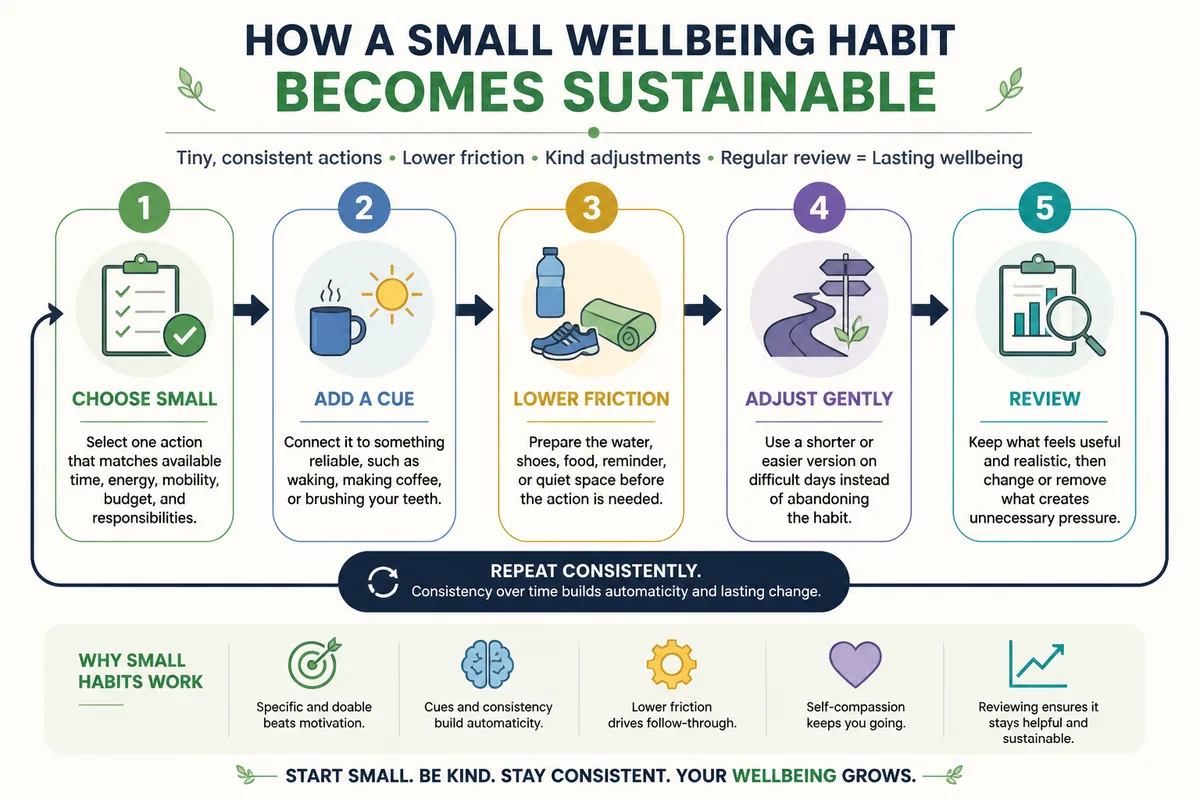
Motivation changes with sleep, stress, health, workload, and life events. A habit linked to something already happening—such as drinking water after making coffee—has a clearer starting point than a vague instruction to “take better care of yourself.” Preparing shoes, fruit, a reminder, or a quiet space in advance can also remove a practical obstacle.
Adaptation is more useful than all-or-nothing thinking. If a twenty-minute walk is unrealistic, a few minutes of gentle movement may be the smallest useful version. If journaling feels demanding, write one sentence. The aim is not to make every day identical; it is to keep the action possible when circumstances change.
Make the habit fit your current life
Choose an action that can survive your actual schedule. A parent with limited uninterrupted time may choose a short stretch beside the bed, while someone working from home may use a regular break to walk around the building. The best first habit is the one you can repeat without putting essential responsibilities at risk.
Build on what you already do
Existing routines provide natural cues. Try stretching after brushing your teeth, sending a message after lunch, or preparing a balanced snack when you make an evening drink. Keep the required items visible and ready, because convenience often matters more than good intentions.
Simple ways to improve wellbeing daily across the areas that matter
There is no need to complete a demanding checklist. Choose one area that feels most relevant today, then select the lowest-effort action that could support it.
Improving wellbeing works best as a menu of realistic choices, not a test of personal discipline. Sleep, food, movement, stress, digital habits, connection, learning, nature, and meaningful activities can each offer a possible entry point.
Support your body with sleep, food, hydration, and gentle movement
A broadly consistent wake-up and wind-down rhythm may be more practical than chasing a perfect sleep schedule. Adult sleep needs vary, and public-health guidance commonly emphasises getting sufficient regular sleep rather than treating one exact number as correct for everyone.
Nourishment can be added without imposing unnecessary restriction. Water, fruit or vegetables, fibre-rich foods, and a protein-containing snack are simple possibilities, but the right choice depends on dietary needs, culture, access, and health conditions. There is no universal requirement to drink a fixed amount such as 64 ounces.
Movement can be divided into short, accessible periods. Walking, mobility exercises, stretching, taking the stairs, or dancing briefly may all be reasonable options. The National Institute of Mental Health gives thirty minutes of daily walking as an example of regular exercise, not as an all-or-nothing requirement.
If you have pain, a health condition, an injury, pregnancy-related concerns, or mobility limitations, choose movement appropriate to your circumstances and ask a qualified healthcare professional for advice when needed.
Create short moments of calm when stress builds
A screen-free pause, quiet music, slow breathing, gentle stretching, or stepping outside can create a brief break from stimulation. Try breathing at a comfortable pace for one minute, allowing the exhale to be slightly longer than the inhale if that feels easy; stop if you feel dizzy or uncomfortable.
These techniques can be supportive, but they are not treatment for severe or persistent distress. Use them as a moment of care, not as a reason to delay professional support.
Protect mental space from digital overload
Turn off non-essential notifications, add intentional screen breaks, and keep devices out of the sleep space where possible. Notice which accounts and applications leave you informed, connected, drained, or overstimulated, then adjust one source of friction instead of attempting a complete digital detox.
Make room for connection and positive notice
Low-pressure contact can include sending a message, sharing a meal, making a short call, or checking in with someone trusted. You can also record one completed task, enjoyable moment, or source of appreciation. This practice should not be used to dismiss grief, conflict, or genuine problems.
Learning, creativity, time in nature, cultural connection, spirituality, volunteering, and hobbies may also contribute to wellbeing when they feel meaningful rather than compulsory. The NHS framework includes learning and giving to others, while broader wellbeing guidance recognises that purpose and belonging can take different forms.
Choose one wellbeing habit for the day you are having
The most useful first step depends on your immediate need, not on an ideal routine. Match the action to your available energy and remove anything that would make the next five minutes harder than necessary.
Choose the smallest action that genuinely helps today. Starting with one realistic habit is better than collecting several recommendations that increase pressure without changing what you do.
When you feel tired or low on energy
Prioritise a manageable sleep cue, a glass of water, daylight, gentle movement, and one realistic priority. Persistent fatigue can have many causes, including health problems, medication effects, stress, and poor sleep, so it should not automatically be treated as a personal failure.
When you feel stressed or overstimulated
Try a one-minute breathing pause, fewer notifications, a change of environment, or one clear boundary such as delaying a non-urgent reply. Choose the action that is possible in the moment; adding another demanding task can increase the load.
When you feel disconnected or overwhelmed
Send one low-pressure message or reduce the next task to less than five minutes. Do not add further habits until the first step feels manageable. If you want ideas for a home-based routine, these simple wellness habits at home can provide additional starting points.
| Current need | Low-effort option | What to avoid |
|---|---|---|
| Low energy | Water, daylight, gentle stretching, one priority | Using exhaustion as evidence of failure |
| Stress or overstimulation | Breathing pause, fewer notifications, quiet space | Adding a complex routine |
| Disconnection | Short message, call, shared meal, trusted contact | Waiting until you feel perfectly social |
| Overwhelm | Reduce the next task to under five minutes | Starting several habits simultaneously |
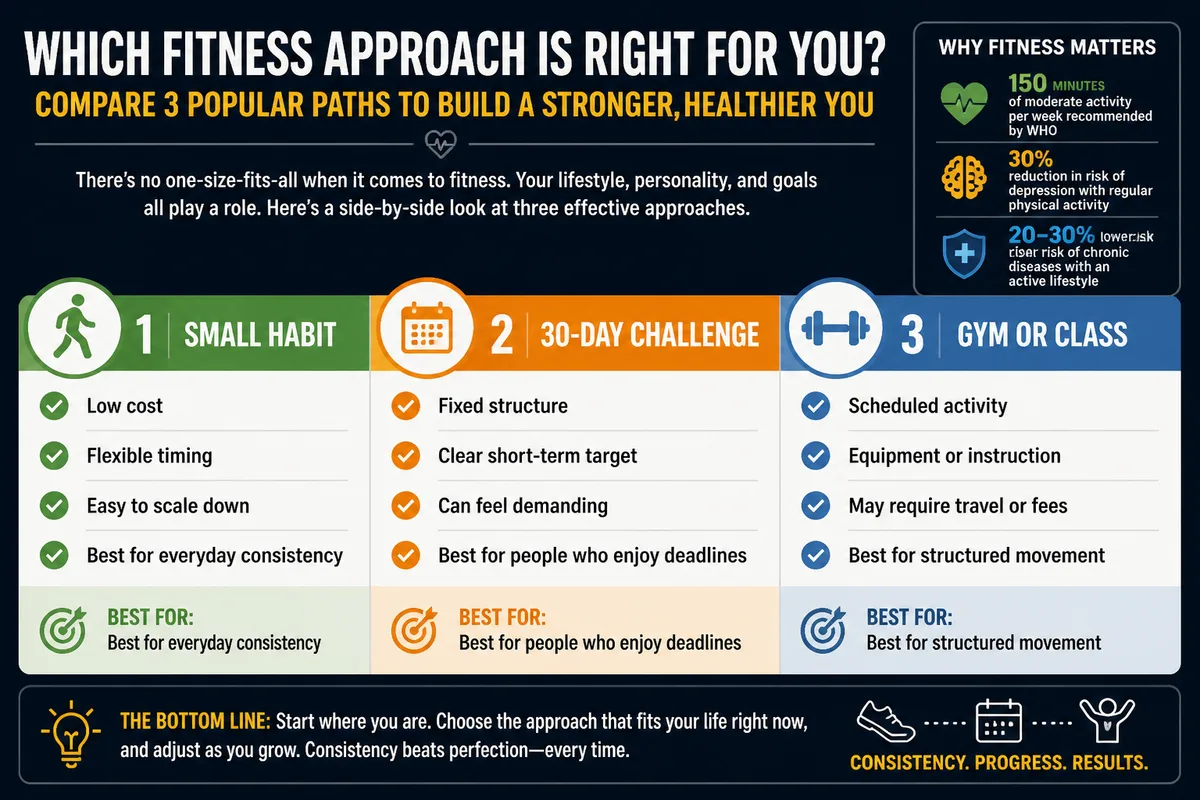
Small sustainable changes are usually a better fit here than a 30-day challenge, an intensive gym plan, or an app-led routine. A challenge may suit someone who enjoys a fixed target, a gym may suit someone who wants structured equipment and classes, and an application may help someone who benefits from reminders. For flexible, low-cost everyday care, choose the small action rather than the demanding programme.
Try this flexible 7-day wellbeing routine
This seven-day routine is an experiment, not a reset or a medical programme. Each action is short enough to adapt, and you may swap, skip, or repeat a day according to your health, schedule, energy, and responsibilities.
Days 1 to 3: create a little more energy and space
-
Water and movement
Drink water after waking, then take a short walk or do gentle stretching. Reduce the movement if pain, fatigue, or mobility limitations make the original option unsuitable.
-
Screen-free pause
Take a five-minute break away from screens. Sit somewhere quiet, look outside, listen to music, or simply allow your attention to settle.
-
Trusted contact
Send a message to someone you trust. It can be brief and does not need to begin a long conversation.
Days 4 to 7: support nourishment, calm, and reflection
-
Prepare nourishment
Prepare one balanced meal or snack using foods that are available and suitable for you. The aim is support, not restriction.
-
Find daylight
Spend a few minutes outdoors or near daylight if this is accessible and comfortable. Adapt the choice for weather, safety, health, or mobility needs.
-
Create a bedtime cue
Begin one calming evening action, such as dimming lights, putting away a device, reading, or listening to quiet music.
-
Review gently
Consider which action felt useful, realistic, and worth continuing. Keep one supportive habit, repeat it, or choose a smaller version.
How to make healthy daily habits sustainable
Sustainability comes from repeatability rather than intensity. A habit that takes two minutes and survives a busy week may be more valuable than a demanding routine completed only under ideal conditions.
Attach the action to a reliable part of the day and prepare what it needs in advance. Shoes by the door, water on the desk, a ready snack, a calendar mark, or a reminder can make the first step easier.
Tracking is optional. A simple note, calendar mark, or weekly reflection can reveal patterns, but tracking should not become another source of guilt. Missing a day does not undo progress; return at the next realistic opportunity.
Common mistakes include starting too many habits, using universal targets as personal rules, choosing an action that ignores pain or disability, waiting for motivation, and treating a lapse as failure. Avoid them by starting with one habit, checking whether the target is appropriate, scaling down early, and restarting without self-criticism.
If your schedule, health, season, finances, or caring responsibilities change, change the habit too. Flexibility is not a weaker version of consistency; it is what allows a routine to continue through real life.
When small lifestyle changes are not enough
Everyday self-care can complement professional support, but it cannot diagnose or treat a mental or physical health condition. Speak with a qualified healthcare or mental health professional when low mood, anxiety, exhaustion, sleep problems, loss of interest, or distress persist, worsen, or interfere with daily functioning, work, relationships, or safety.
The National Institute of Mental Health advises seeking professional help for severe or distressing symptoms lasting two weeks or more. This is a safety-oriented reference point, not a rule that requires you to wait two weeks when you are concerned.
For general mental wellbeing guidance, the NHS five-step framework and information from the National Institute of Mental Health can help you distinguish everyday supportive habits from situations requiring additional care. For a personal assessment, contact an appropriate healthcare professional.
Frequently Asked Questions
Small, sustainable actions are a reasonable starting point for everyday wellbeing, but expectations should remain realistic. The answers below cover timing, consistency, and when self-care should give way to professional support.
What is the easiest way to improve wellbeing?
Start with one action linked to an existing routine, such as drinking water, taking a short walk, sending a social message, or beginning a calming bedtime cue. Choose the option that requires the least effort today.
How long does it take for small habits to improve wellbeing?
Some people may notice an immediate benefit from a pause, movement, daylight, or connection, while broader changes vary. Repetition, personal circumstances, health, and the type of habit all influence what you notice.
Can five-minute habits improve mental wellbeing?
Five-minute habits can create useful moments of calm, movement, structure, or connection. They are supportive practices, not a replacement for professional treatment when symptoms are severe, persistent, or disruptive.
How many wellbeing habits should I start at once?
Begin with one habit, or at most two if both are genuinely easy to maintain. A smaller starting point reduces overwhelm and helps you learn what fits your life.
What should I do if I cannot stay consistent?
Make the habit smaller, change the cue, or adjust the environment so the first step is easier. Restart at the next realistic opportunity and treat the interruption as information, not proof that you have failed.
When should I seek professional support?
Seek support when low mood, anxiety, exhaustion, sleep problems, or loss of interest persist, worsen, or interfere with everyday life, relationships, work, or safety. Contact local emergency services or a crisis service immediately if there is immediate danger or a risk of self-harm.