How to Modernize Your Home Exterior Without a Complete Remodel
Want to modernize your home exterior without paying for a complete remodel? Start with repairs and visible maintenance, then coordinate paint, siding, windows, doors, lighting, landscaping, and entry details around your home’s architecture.
The strongest improvements usually come from choosing a clear priority instead of changing everything at once. A fresh front door, controlled exterior paint palette, updated lighting, and simpler landscaping can change the first impression while larger work remains optional and easier to plan.
Which exterior updates create the biggest visual change?
Clean the exterior first, then focus on the front-facing elements people notice immediately: the entry door, trim, lighting, house numbers, pathway, and planting structure. These improvements often require less disruption than replacing a roof or façade, while coordinated colors and materials create a more modern appearance.
Start at the street.
Repair visible problems before decorating.
A practical first pass includes washing appropriate surfaces, removing damaged accessories, trimming overgrown plants, repainting worn trim, and replacing mismatched hardware so the home looks cared for before you add a new style.
For small houses and compact lots, avoid filling every open area with furniture or plants. A restrained pathway, one defined planting bed, and a clear entrance can make the property feel larger; these small-space garden ideas can help when the front yard has limited room.
- Fast visual refresh: clean surfaces, paint the door, update numbers, and replace dated light fixtures.
- Moderate improvement: refresh trim, repair siding, improve the pathway, and simplify landscaping.
- Major partial upgrade: replace a garage door, add selected façade accents, or update windows in poor condition.
Start with an exterior condition audit
Before selecting exterior paint colors or ordering new materials, inspect the surfaces that protect the house from water, wind, and heat. Look for peeling paint, soft wood, cracked masonry, loose siding, blocked gutters, deteriorated sealants, and moisture marks around windows or doors.
Use a written checklist.
Photograph every elevation.
Walk around the house after rain if possible, because staining, pooling water, overflowing gutters, and damp areas can reveal problems that remain invisible during dry weather.
Roofing, structural movement, electrical work, elevated work, and window installation deserve professional assessment when the condition is uncertain, because cosmetic improvements applied over an active leak or unsafe structure can conceal the evidence and increase later repair work.
Separate repairs from appearance upgrades
Group findings into three categories: urgent protection, functional replacement, and visual improvement. A damaged flashing detail belongs in the first category; a failing exterior light belongs in the second; a new door color belongs in the third.
Fix water entry first.
Then choose finishes.
| Finding | Priority | Practical response |
|---|---|---|
| Active leak or damaged flashing | Urgent | Arrange a qualified inspection before painting or covering the area. |
| Loose siding or rotted trim | High | Repair or replace affected sections, then match the surrounding finish. |
| Faded paint or stained surfaces | Visual | Clean, prepare, and repaint only after the substrate is sound. |
| Outdated hardware or numbers | Low disruption | Replace items in one finish so the entrance feels intentional. |
How should you coordinate paint, siding, and materials?
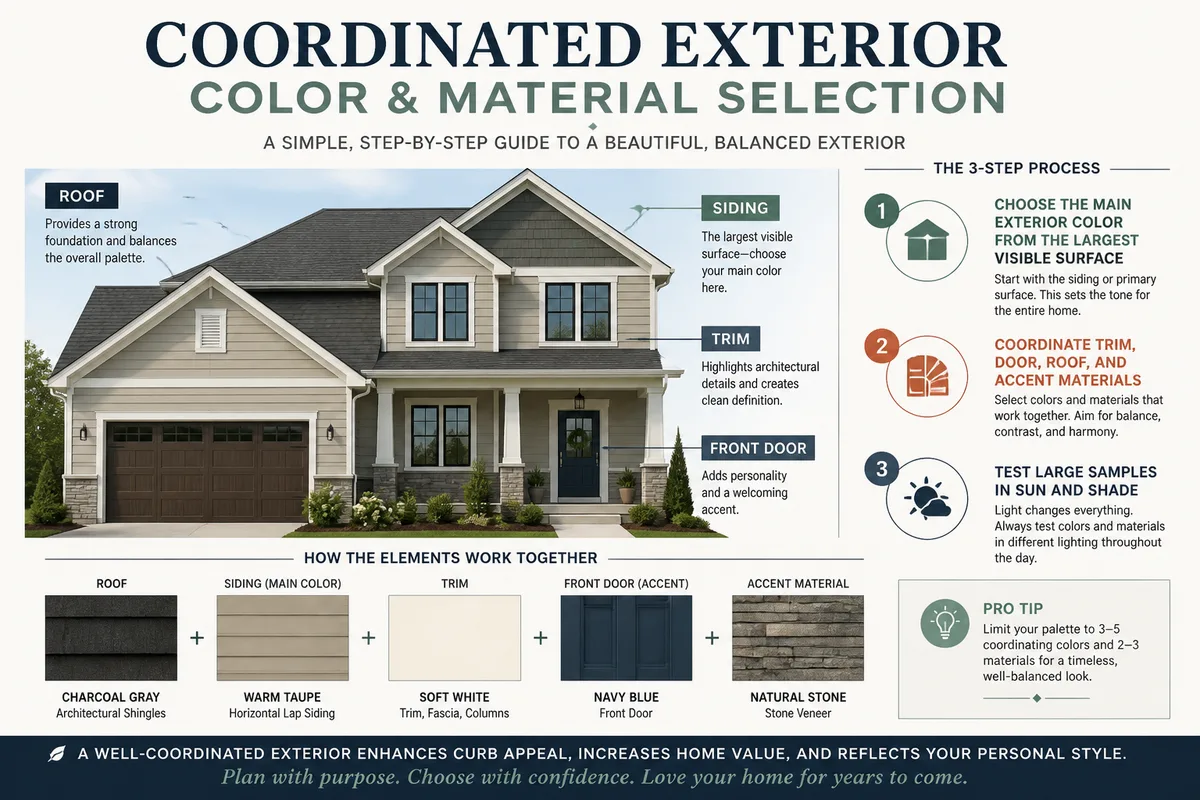
Choose the main exterior color from the largest visible surface, then select trim, door, roof, and accent materials around it. A modern palette usually feels more deliberate when it limits competing colors and repeats one finish across several small details.
Large surfaces need restraint.
Contrast belongs at the entry.
Warm cream, muted gray, soft white, charcoal, natural wood tones, and subdued greens can all support modern exterior design ideas, although the right choice depends on sunlight, surrounding homes, roof color, masonry, and the architectural period of the property.
Do not select a paint color from a small indoor swatch alone. Test large samples on different sides of the house, because direct sun, shade, nearby vegetation, and existing brick or stone can change how the color appears throughout the day.
Use materials selectively
You can introduce wood-look panels, metal details, stone veneer, fiber-cement accents, or refreshed siding without replacing the entire façade, provided the new material handles local moisture, heat, fire exposure, and installation requirements.
One accent zone is enough.
Too many textures create visual noise.
Coordinate siding and roof tones rather than treating each surface as an independent decision. A dark roof with a dark façade may reduce contrast, while a light wall with a bright white trim can feel sharper and more contemporary.
Improve the front door, entryway, and exterior lighting
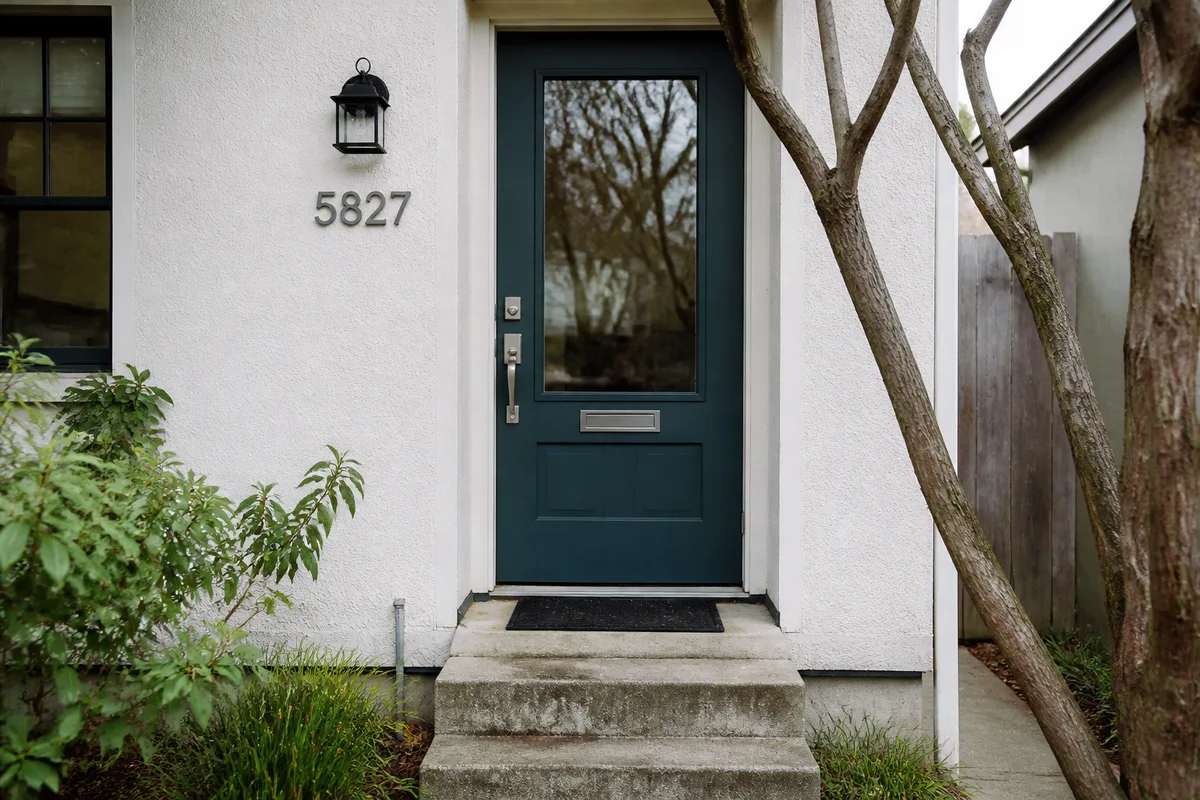
The entryway combines several high-visibility details in one small area, so a front door makeover can have an immediate effect. Pair the door color with new hardware, clear house numbers, a practical doormat, repaired steps, and lighting that illuminates both the doorway and the approach.
The entrance sets the tone.
Keep the path visible.
Use layered lighting rather than one oversized fixture: a wall-mounted light near the door, low-level path lighting where appropriate, and focused illumination for steps or changes in level can improve usability after dark.
Electrical connections and new exterior circuits should be handled according to local requirements by a qualified professional when the work exceeds a simple fixture replacement. Select fixtures rated for outdoor exposure and follow the manufacturer’s installation instructions.
Small entry details that matter
- Replace faded or hard-to-read house numbers.
- Match the finish of the handle, door knocker, numbers, and light fixture.
- Repair cracked steps, loose railings, and uneven walking surfaces.
- Choose a porch color that supports the main wall and door palette.
- Keep decorative objects away from the walking route.
Use landscaping to frame the house
Modern landscaping ideas usually rely on structure, repetition, and easier maintenance rather than a large collection of unrelated plants. Define the route to the door, keep windows visible, and use planting masses to support the façade instead of hiding it.
Clear sightlines first.
Then add planting.
Use local climate information when choosing species, irrigation, mulch, and hardscape materials. A plant that performs well in a dry region may struggle beside a shaded, wet foundation, while a material suitable for mild weather may require different maintenance in freeze-thaw conditions.
For seasonal planting decisions, consult a climate-specific schedule such as this seasonal garden planning guide, then confirm plant suitability with a local nursery, extension service, or landscape professional.
Front yard and backyard priorities
At the front, prioritize the entry route, foundation planting, mailbox area, and visible driveway edges. In the backyard, create a clear use zone with durable surfacing, shade, seating, or screening instead of spreading improvements across the entire property.
Define one outdoor zone.
Repeat two or three plant forms.
Hardscaping should shed water away from the house and remain compatible with local drainage conditions. Raised beds, retaining walls, grading changes, and large paved areas can affect water movement, so complex changes deserve professional planning.
Which modernization option fits your budget and project tolerance?
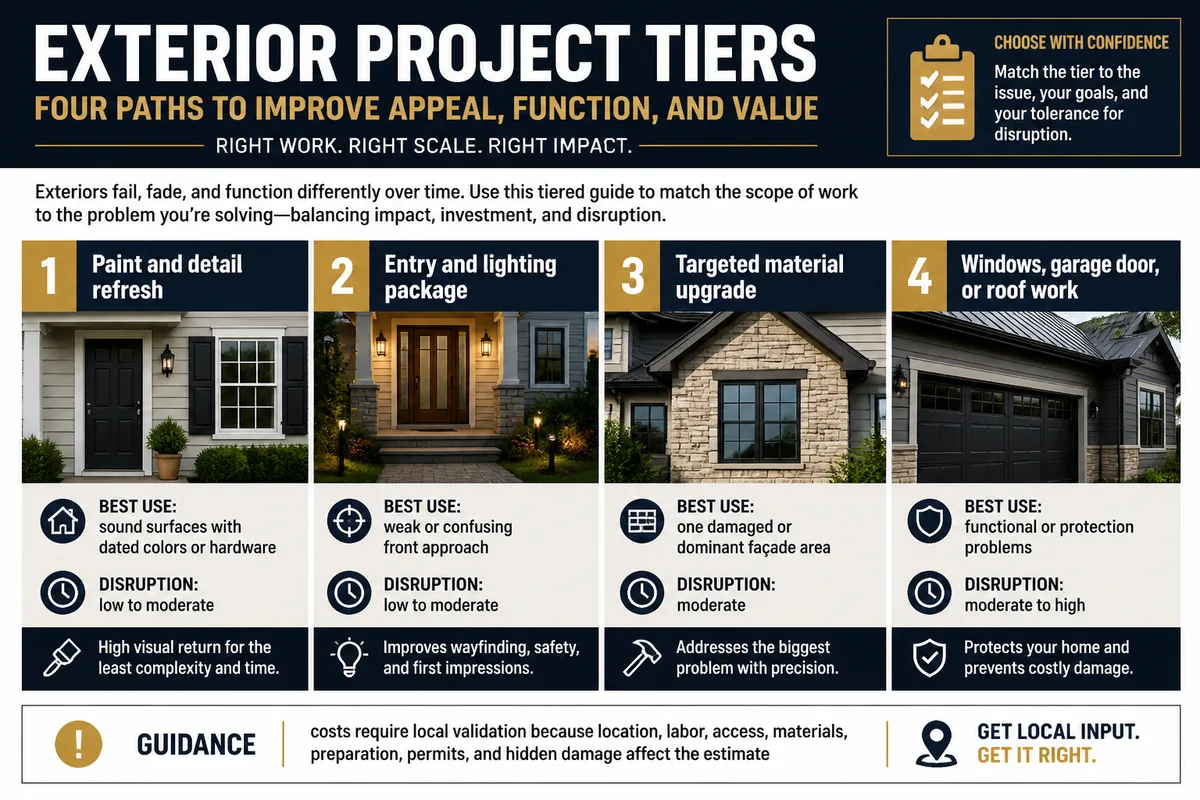
Choose the smallest project that solves the visible problem you actually have. A paint-and-hardware refresh suits a sound exterior with dated details, while targeted siding, window, or garage-door work makes more sense when a specific component is damaged or visually dominant.
Start with the problem.
Do not start with a catalog.
| Option | Best use | Disruption | Budget approach |
|---|---|---|---|
| Paint and detail refresh | Sound surfaces with dated colors or hardware | Low to moderate | Price materials and labor locally before committing |
| Entry and lighting package | Homes with a weak or confusing front approach | Low to moderate | Combine door, numbers, hardware, and fixtures |
| Targeted material upgrade | One damaged or visually dominant façade area | Moderate | Obtain an itemized quote for preparation and installation |
| Windows, garage door, or roof work | Components with functional or protection problems | Moderate to high | Compare equivalent scopes from qualified contractors |
Costs vary with location, labor rates, access, home size, material quality, preparation, permits, and hidden damage. Online visualizers can help compare design directions, yet they cannot replace a construction estimate that accounts for measurements, substrate condition, code requirements, disposal, and installation details.
For contractor-led work, request two or three bids using the same written scope. Compare preparation, materials, warranty terms, exclusions, payment schedule, cleanup, and estimated timing rather than choosing from the headline price alone.
How should you sequence an exterior makeover?
Follow a protection-first sequence so later work does not damage newly finished surfaces. The usual logic is to resolve leaks and unsafe conditions, complete disruptive component work, finish paint and trim, then install accessories and complete the landscape cleanup.
Protect the house first.
Finish with movable details.
- Document the existing exterior. Photograph each side, record dimensions, and note damaged areas before removing anything.
- Resolve water and safety concerns. Address leaks, unstable railings, damaged steps, unsafe wiring, structural movement, or deteriorated materials with qualified help where required.
- Complete disruptive upgrades. Schedule necessary roofing, window, siding, garage-door, or masonry work before final painting and planting.
- Prepare and paint. Clean compatible surfaces, repair defects, prime where required, and apply exterior products according to manufacturer instructions.
- Install entry details. Add the door hardware, numbers, lighting, railings, mailbox, and other accessories after major dust-producing work ends.
- Finish the landscape. Define paths, refresh beds, correct minor presentation issues, and keep drainage routes clear.
Project duration depends on scope, weather, material availability, crew size, inspections, and the condition discovered after removal. A door and paint refresh may fit a short work window, while multiple trades require a longer schedule that should be confirmed in writing.
How can you adapt a modern look to different home styles?
Modernization works best when it clarifies the existing architecture instead of forcing a completely unrelated appearance. Use the home’s roofline, proportions, window placement, masonry, and entry geometry as boundaries, then simplify colors and details within that framework.
Respect the original proportions.
Modern does not mean uniform.
Split-level homes
Emphasize the main entrance, use consistent trim colors across the different levels, and improve the path so visitors understand where to approach. A single accent material near the entry can visually connect separate volumes.
Ranch homes
Long, low façades benefit from stronger entry definition, horizontal material emphasis, and landscaping that breaks up an uninterrupted wall. Keep shrubs below important windows and use lighting to mark the doorway without creating glare.
Colonial homes
Symmetry often provides the starting point. Coordinated shutters, restrained door color, traditional proportions, and evenly placed lighting can refresh the appearance while preserving the home’s recognizable character.
Other architectural styles
For cottages, contemporary homes, farmhouses, and mixed-style properties, identify the dominant material and repeat it in smaller details. The right choice depends on the façade already present, neighborhood context, climate exposure, and maintenance capacity.
Common mistakes that make exterior updates look unfinished
Most disappointing exterior makeovers fail through poor coordination or incorrect sequencing rather than a lack of attractive products. Avoid covering damage, selecting colors independently, adding too many materials, and treating a digital preview as a measurement or construction document.
More decoration will not fix damage.
One strong direction beats five accents.
- Painting before repairing moisture damage: new coatings may peel or conceal deterioration. Find and correct the water source first.
- Choosing every finish separately: unrelated roof, siding, trim, door, and metal colors can make the façade feel accidental. Create a small material board before purchasing.
- Replacing sound materials unnecessarily: full siding or window replacement adds disruption when cleaning, repair, paint, or selective accents could solve the visible issue.
- Using indoor products outdoors: interior paint, untreated wood, or non-rated fixtures can fail quickly under moisture, sunlight, temperature changes, or fire-safety requirements.
- Ignoring access and drainage: a new path, bed, wall, or paved area can obstruct maintenance or redirect water toward the foundation. Check slopes and service access before installation.
One common belief is that a modern exterior requires replacing the entire façade. A sound façade can change substantially through coordinated color, entry design, lighting, trim, and landscape structure, leaving replacement work for components that genuinely need it.
When should you hire a professional?
Bring in qualified help when the work involves roofing, structural movement, electrical circuits, gas, significant height, window openings, retaining walls, drainage changes, or materials whose installation affects weather protection. Professional input also matters when local permits, fire separation, historic rules, or manufacturer specifications apply.
Do not improvise on a roof.
Do not bypass electrical requirements.
A professional quote should describe preparation, products, quantities, installation method, cleanup, exclusions, warranty terms, and payment milestones. Ask who will perform the work, whether subcontractors are involved, and which permits or inspections are included.
For a purely cosmetic project on sound, accessible surfaces, careful homeowners may handle cleaning, hardware replacement, planting, and some painting with suitable preparation and safety equipment. Elevated work, uncertain substrates, and any task involving energized wiring should leave the do-it-yourself category.
Exterior modernization checklist
Use this checklist before buying materials or scheduling labor. It keeps the project focused on visible impact, protection, compatibility, and the limits of a partial renovation rather than allowing small purchases to expand into an unplanned full remodel.
Write the scope down.
Keep one contingency allowance.
- Photograph every exterior elevation.
- Check roof edges, flashing, gutters, siding, masonry, trim, windows, doors, steps, and railings.
- Separate urgent repairs from functional replacements and cosmetic improvements.
- Choose a main wall color, trim color, door color, roof relationship, and metal finish.
- Test exterior paint samples in sun and shade.
- Confirm material ratings, moisture control, fire safety, and manufacturer instructions.
- Check local permit and inspection requirements before regulated work.
- Request itemized local quotes for work beyond a simple cosmetic refresh.
- Sequence disruptive work before painting, lighting accessories, and final landscaping.
- Keep the design consistent with the home’s proportions and surrounding context.
The most reliable plan is selective: repair what protects the building, modernize the elements that dominate the view, and postpone replacement work that has no functional reason to happen now. That approach improves the exterior without turning every dated detail into a complete remodel.