How Far Ahead Should You Plan a Vacation? A Booking Timeline for Every Trip Type
How far ahead to plan a vacation depends on your destination, travel dates, budget, group size, and the type of trip you are organizing. As a general rule, most vacations benefit from three to six months of planning. Peak-season holidays, international journeys, cruises, honeymoons, and large-group trips may require six to twelve months or more.
The ideal timeline is not only about finding a cheap flight. It also gives you time to secure the right accommodation, arrange transportation, reserve limited-capacity activities, check entry requirements, and build a comfortable itinerary. This guide explains when to start researching, what to book first, and how early to plan different types of vacations.
How Far Ahead Should You Plan a Vacation?
The General Planning Window
For many travelers, three to six months before departure is a practical starting point. This window usually provides enough time to compare transportation and accommodation while avoiding the uncertainty that comes with planning too far ahead. It is especially suitable for ordinary domestic trips, city breaks, road trips, and shoulder-season travel.
It helps to separate vacation planning into three stages:
- Research: compare destinations, dates, weather, prices, and local events.
- Reservations: book flights, hotels, rental cars, tours, tickets, and other essential arrangements.
- Final preparation: confirm documents, policies, schedules, packing needs, and health requirements.
You may begin researching nine to twelve months in advance without booking everything immediately. This is useful when you are considering a popular destination or traveling during a period of high demand. Starting early helps you identify realistic prices and understand which elements sell out first.
When to Start Planning Earlier
Plan earlier when your dates are fixed or your trip has several moving parts. School holidays, public holidays, summer weekends, and major events can cause flights and hotels to fill quickly. Families are also more likely to need connecting rooms, larger suites, child-friendly transportation, and activities at convenient times.
Early planning is particularly valuable for:
- International trips requiring passports, visas, vaccinations, or special documentation.
- Popular destinations during peak travel seasons.
- Honeymoons, milestone birthdays, anniversaries, and once-in-a-lifetime vacations.
- Cruises, safari lodges, national park permits, and limited-capacity tours.
- Large groups traveling together or trying to stay in the same property.
- Trips built around concerts, festivals, sporting events, or conferences.
In these cases, starting six to twelve months ahead gives you more choice. You can often select better flight times, preferred hotel rooms, specific cruise cabins, and popular restaurant or tour reservations before availability becomes limited.
When a Shorter Planning Window May Work
Last-minute or short-notice planning can work for travelers who have flexible dates, destinations, and accommodation preferences. A weekend in a nearby city, a domestic trip during the shoulder season, or a stay in a low-demand destination may be organized within a few weeks.
The trade-off is reduced choice. You may need to accept an inconvenient flight time, stay outside the most popular area, pay more for a rental car, or change your itinerary when a particular activity is unavailable. Last-minute planning is most successful when you can adjust your dates and are comfortable making decisions quickly.
Vacation Booking Timeline at a Glance
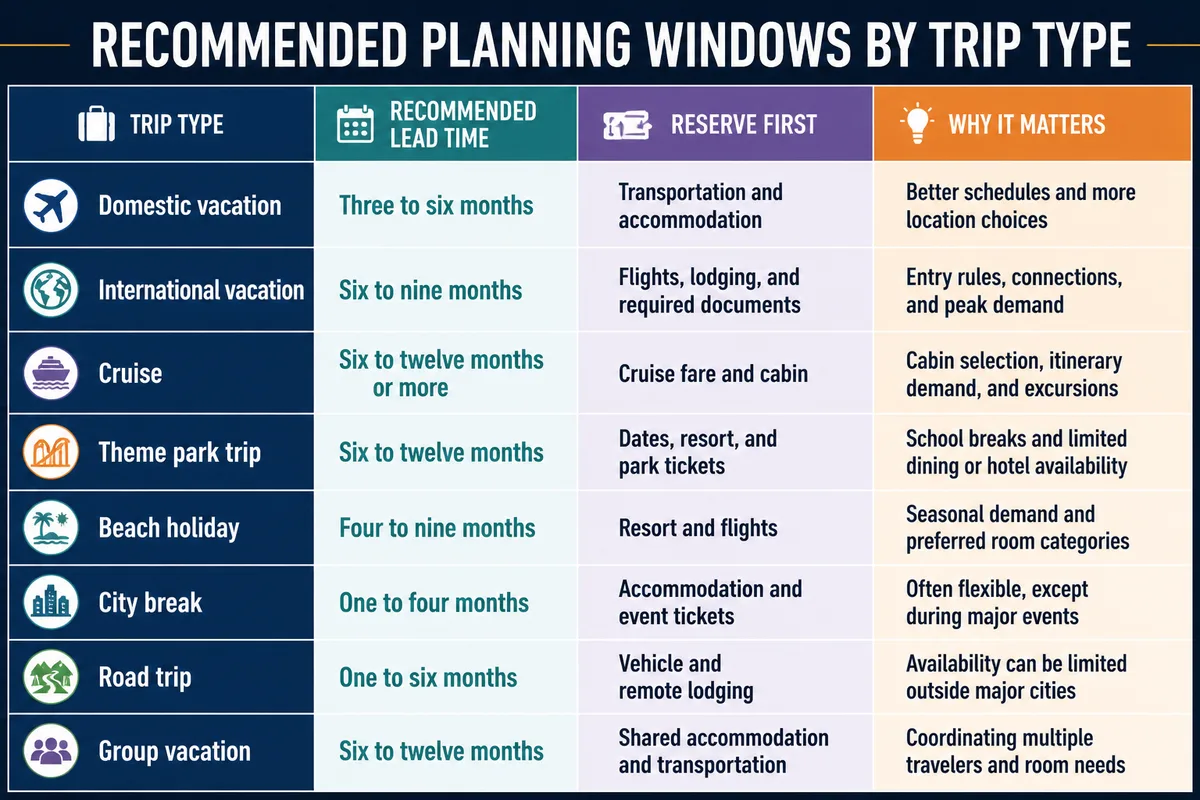
Recommended Planning Windows by Trip Type
| Trip type | Recommended lead time | Reserve first | Main reason |
|---|---|---|---|
| Domestic vacation | Three to six months | Transportation and accommodation | Better schedules and more location choices |
| International vacation | Six to nine months | Flights, lodging, and required documents | Entry rules, connections, and peak demand |
| Cruise | Six to twelve months or more | Cruise fare and cabin | Cabin selection, itinerary demand, and excursions |
| Theme park trip | Six to twelve months | Dates, resort, and park tickets | School breaks and limited dining or hotel availability |
| Beach holiday | Four to nine months | Resort and flights | Seasonal demand and preferred room categories |
| City break | One to four months | Accommodation and event tickets | Often flexible, except during major events |
| Road trip | One to six months | Vehicle and remote lodging | Availability can be limited outside major cities |
| Group vacation | Six to twelve months | Shared accommodation and transportation | Coordinating multiple travelers and room needs |
A Simple Month-by-Month Framework
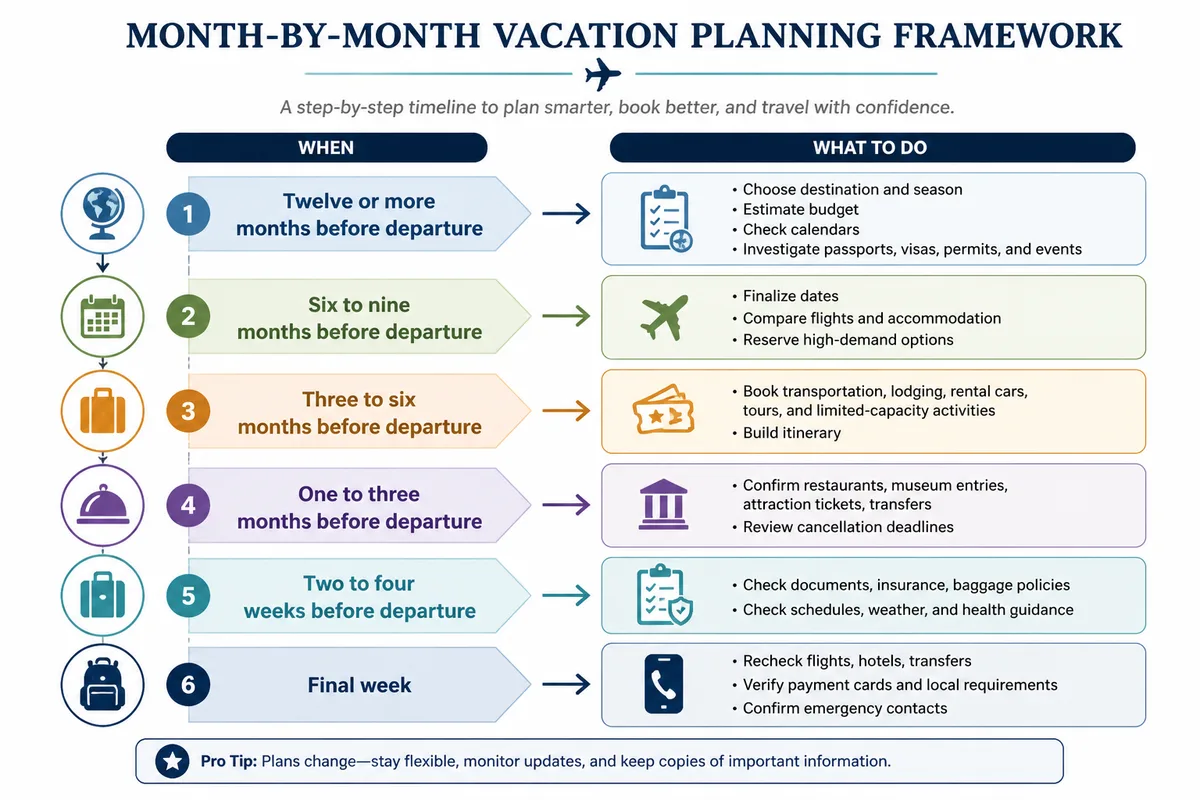
Twelve or more months before departure: Choose a general destination and season, estimate the budget, check school or work calendars, and investigate passports, visas, permits, and major local events.
Six to nine months before departure: Finalize dates, compare flights and accommodation, and reserve high-demand options. This is an important stage for international vacations, cruises, theme parks, family trips, and peak-season beach holidays.
Three to six months before departure: Book the core arrangements for most trips. Reserve transportation, lodging, rental cars, tours, and activities that have limited capacity. Begin building a realistic daily itinerary.
One to three months before departure: Confirm restaurants, museum entries, attraction tickets, transfers, and other time-specific plans. Review cancellation deadlines and make sure all traveler information is correct.
Two to four weeks before departure: Check documents, travel insurance, baggage policies, transportation schedules, weather, and health guidance. Download confirmations and make backup copies.
The final week: Recheck flights, hotel details, transfers, payment cards, local requirements, and emergency contacts. Avoid adding too many last-minute activities to the schedule.
How Far Ahead to Book Different Parts of Your Trip
Flights
Domestic flights can often be booked one to six months ahead, while international flights usually deserve more advance attention, especially when dates are fixed. Nonstop routes, limited regional services, and school holiday departures can sell out earlier than standard routes.
Monitor fares before purchasing and compare the total value of each option, including baggage, seat selection, airport transfers, and change conditions. A slightly more expensive ticket may be worthwhile if it includes a convenient schedule or flexible changes. Early booking improves choice and predictability, but it does not guarantee the lowest possible fare.
Hotels and Vacation Rentals
Accommodation should be reserved earlier when you want a specific neighborhood, room type, view, resort, or property. Popular areas can have limited availability even when the destination itself still has rooms. Vacation rentals may also impose minimum-stay rules, cleaning fees, deposits, and strict cancellation deadlines.
Compare refundable and nonrefundable rates carefully. A nonrefundable price may be lower, but a refundable reservation can protect you if plans change. Check the total cost, including taxes, resort fees, service charges, parking, and security deposits.
Rental Cars and Ground Transportation
Book rental cars early for remote destinations, one-way journeys, island trips, holidays, and busy summer periods. Vehicle supply can be limited, particularly for larger cars, automatic transmissions, vans, and specialty vehicles.
Before confirming, review driver age requirements, insurance, deposit rules, fuel policies, mileage limits, pickup hours, and cancellation terms. In some destinations, trains, airport transfers, ferries, or private drivers may also require advance reservations.
Cruises and Organized Tours
Cruises and organized tours often reward early planning because capacity is fixed. Booking six to twelve months ahead may provide a better selection of cabins, itineraries, departure dates, and dining times. Popular shore excursions and small-group tours can also sell out before departure.
Check the deposit schedule, final payment deadline, cancellation policy, port transportation, and required travel documents. A low initial deposit does not necessarily mean the trip is inexpensive, so calculate the full cost before committing.
Activities, Restaurants, and Special Experiences
Reserve early for theme park dining, national park permits, popular attractions, guided hikes, theater performances, sporting events, and highly rated restaurants. Experiences with timed entry or small group sizes are the least flexible.
Tickets for casual attractions, public parks, and ordinary restaurants can often wait until closer to departure. Leave some unscheduled time so the trip remains enjoyable rather than becoming a series of rigid appointments.
Planning Timelines by Vacation Type
Domestic Vacation
Plan a typical domestic vacation three to six months ahead. Reserve transportation and accommodation first, then add activities. Extend the timeline for holidays, festivals, sports events, remote destinations, or places with limited hotel capacity.
International Vacation
International travel usually benefits from six to nine months of preparation, and sometimes longer. Allow extra time for passport renewals, visas, vaccinations, travel insurance, connections, and entry forms. Always check official government and destination sources before booking nonrefundable arrangements.
Family Vacation
Families should often begin six to twelve months ahead, especially when traveling during school breaks. Larger rooms, connecting rooms, child-focused activities, and convenient transportation are limited resources. Confirm that accommodations meet practical needs such as kitchen access, cribs, elevators, and suitable sleeping arrangements.
Beach Vacation
Peak beach season may require four to nine months of planning. Resort availability, weather patterns, school holidays, and preferred room categories all affect demand. Shoulder-season travel can offer more choice and lower prices, but research seasonal rainfall, storms, closures, and water conditions.
City Break
A city break may be planned one to four months ahead, particularly if you are flexible about dates and hotel location. Festivals, conferences, concerts, fashion events, and major sporting occasions are important exceptions. Check the event calendar before choosing your travel dates.
Road Trip
Road trips benefit from advance route design, but they should not be planned so tightly that there is no room for change. Reserve lodging in remote areas, rental vehicles, park permits, ferries, and popular activities early. Keep less popular stops flexible so you can respond to weather, traffic, and unexpected discoveries.
Theme Park Vacation
Theme park vacations often require six to twelve months of planning. Check the park calendar before booking dates, then coordinate resort hotels, park tickets, dining reservations, transportation, and high-demand experiences. Families traveling during school holidays should begin as early as possible.
What to Book First When Planning a Vacation
Step One: Choose the Dates and Destination
Balance your budget, preferred weather, school schedules, local events, and personal priorities. If you have flexibility, compare several date ranges before making nonrefundable reservations.
Step Two: Reserve the Least Flexible Elements
Book the arrangements with the fewest alternatives first. These may include limited flights, cruise cabins, national park permits, special accommodation, event tickets, or an essential ferry connection.
Step Three: Secure Lodging and Transportation
Compare location, total cost, cancellation conditions, practical travel time, and transport access. The cheapest room or flight is not always the best choice if it creates expensive transfers or a tiring schedule.
Step Four: Reserve High-Demand Activities
Prioritize experiences with strict time slots, limited capacity, or strong local demand. Leave flexible attractions and casual dining for later.
Step Five: Complete Documents and Final Preparations
Check passport validity, visas, insurance, health guidance, payment cards, confirmations, and emergency contacts. Use official sources for entry requirements because rules can change.
Is It Better to Book a Vacation Early or Wait?
Advantages of Booking Early
- More choice of flights, rooms, vehicles, cabins, and activities.
- Better coordination for families and groups.
- More time to spread out payments and prepare documents.
- Greater protection against sellouts during peak periods.
Advantages of Waiting
Waiting may provide access to promotions or more accurate short-term information about weather and events. It can work well for flexible travelers visiting low-demand destinations. However, waiting is not a reliable strategy for guaranteeing lower prices.
The Risks of Booking Too Early or Too Late
Booking too early can create uncertainty if personal plans, prices, schedules, or policies change. Booking too late can limit availability and increase costs. When uncertainty is high, prioritize refundable or changeable options and record every cancellation deadline.
Common Vacation Planning Mistakes
- Waiting too long to check passport, visa, and entry requirements.
- Choosing the cheapest rate without reading cancellation conditions.
- Forgetting seasonal closures, local holidays, or major events.
- Underestimating transfer times, jet lag, and travel fatigue.
- Leaving limited-capacity activities until the last minute.
- Creating an itinerary that is too full to be enjoyable.
- Ignoring baggage rules, resort fees, taxes, deposits, and exchange costs.
Frequently Asked Questions
How many months ahead should I book a vacation?
Three to six months is a useful general recommendation. Plan six to twelve months ahead for international trips, cruises, school holidays, popular destinations, large groups, and special occasions.
Is it cheaper to book a vacation early?
Early booking can improve choice and price predictability, but it does not guarantee the lowest fare. Compare flexible and nonrefundable options and evaluate the total cost.
How far ahead should I book an international trip?
Start six to nine months ahead for popular destinations or fixed dates. Allow additional time for passports, visas, vaccinations, connections, and entry requirements.
When should I book a family vacation?
Families should often begin six to twelve months ahead, particularly for school breaks, popular resorts, larger room types, and coordinated transportation.
How early should I plan a cruise?
Six to twelve months or more can help with cabin selection, itinerary availability, dining times, shore excursions, and payment planning.
Can I plan a vacation at the last minute?
Yes, if you are flexible about dates, destinations, flights, and accommodation. The trade-offs may include fewer choices, higher prices, inconvenient schedules, and unavailable activities.
What should I book first on a vacation?
Secure the least flexible and most capacity-constrained elements first, such as specific flights, cruise cabins, permits, event tickets, remote lodging, or essential transfers.
Final Vacation Booking Checklist
- Confirm the destination, dates, budget, and traveler details.
- Check passport, visa, health, and entry requirements through official sources.
- Book transportation, accommodation, and essential activities.
- Review cancellation, change, baggage, payment, and insurance conditions.
- Save confirmations, receipts, and emergency contact information.
- Recheck schedules, weather, documents, and local requirements before departure.
For most travelers, the best answer to how far ahead to plan a vacation is three to six months. Start earlier when demand is high, capacity is limited, or your dates cannot change. With the right timeline, you can protect your budget, improve your choices, and enjoy a smoother trip from the first booking to the journey home.