Advantages and Disadvantages of Technology in Everyday Life: A Balanced Guide
Technology in everyday life influences how people communicate, work, study, shop, travel, manage their health, and relax. Smartphones, computers, online services, smart appliances, and artificial intelligence have made many tasks faster and more convenient. At the same time, these tools can create problems involving privacy, distraction, cybersecurity, social relationships, employment, and the environment. Understanding both sides allows people to make informed choices and use technology in a healthier, safer, and more responsible way.
How Technology Shapes Daily Life
Everyday technology includes the digital tools and connected services people use regularly. A smartphone may serve as a phone, camera, map, wallet, calendar, news source, entertainment system, and gateway to professional or educational resources. Similarly, a laptop can support work, communication, banking, shopping, research, and creative projects from almost anywhere.
Technology is now central to many essential activities. Families use messaging applications and video calls to stay in contact. Employees collaborate through cloud platforms and virtual meetings. Students attend online courses, access digital libraries, and complete assignments through educational applications. Consumers order products, compare prices, and manage payments online, while patients may book appointments or consult healthcare professionals remotely.
This integration brings significant benefits, but convenience should not be confused with perfection. A service may save time while collecting personal data. A communication platform may connect people across continents while encouraging superficial interaction. The goal is therefore not to accept or reject technology completely, but to evaluate how each tool affects individual well-being and society.
What Counts as Technology in Everyday Life?
Digital Devices and Online Services
Common examples include smartphones, desktop computers, laptops, tablets, smartwatches, fitness trackers, wireless headphones, and internet-connected televisions. These devices provide access to online banking, shopping websites, public services, streaming platforms, social networks, professional tools, and communication applications.

Cloud storage allows documents and photographs to be accessed from several devices. Navigation applications help people plan journeys and avoid traffic. Digital payment systems can make transactions quicker, while online appointment systems reduce the need to visit offices in person. However, these advantages depend on reliable internet access, suitable devices, and sufficient digital skills.
Smart Homes and Emerging Technologies
Smart homes may include connected lights, thermostats, doorbells, security cameras, appliances, and voice assistants. Automation can adjust the temperature, remind users about appointments, turn off lights, or alert residents to unusual activity. Artificial intelligence is also being integrated into search tools, customer service, translation, content creation, and personal recommendations.
These innovations can simplify routines, but they also raise questions. Connected devices may collect information about habits, movements, conversations, or energy use. Poorly protected systems can become targets for hackers. Before purchasing a smart device, users should consider its security features, update policy, data practices, and necessity.
The Main Advantages of Technology in Everyday Life
Faster and Easier Communication
Instant messaging, email, video calls, and social platforms allow people to communicate in seconds. Relatives living in different countries can share photographs, celebrate events through video, or speak regularly without expensive travel. Businesses can coordinate projects across time zones, and emergency information can be distributed quickly.
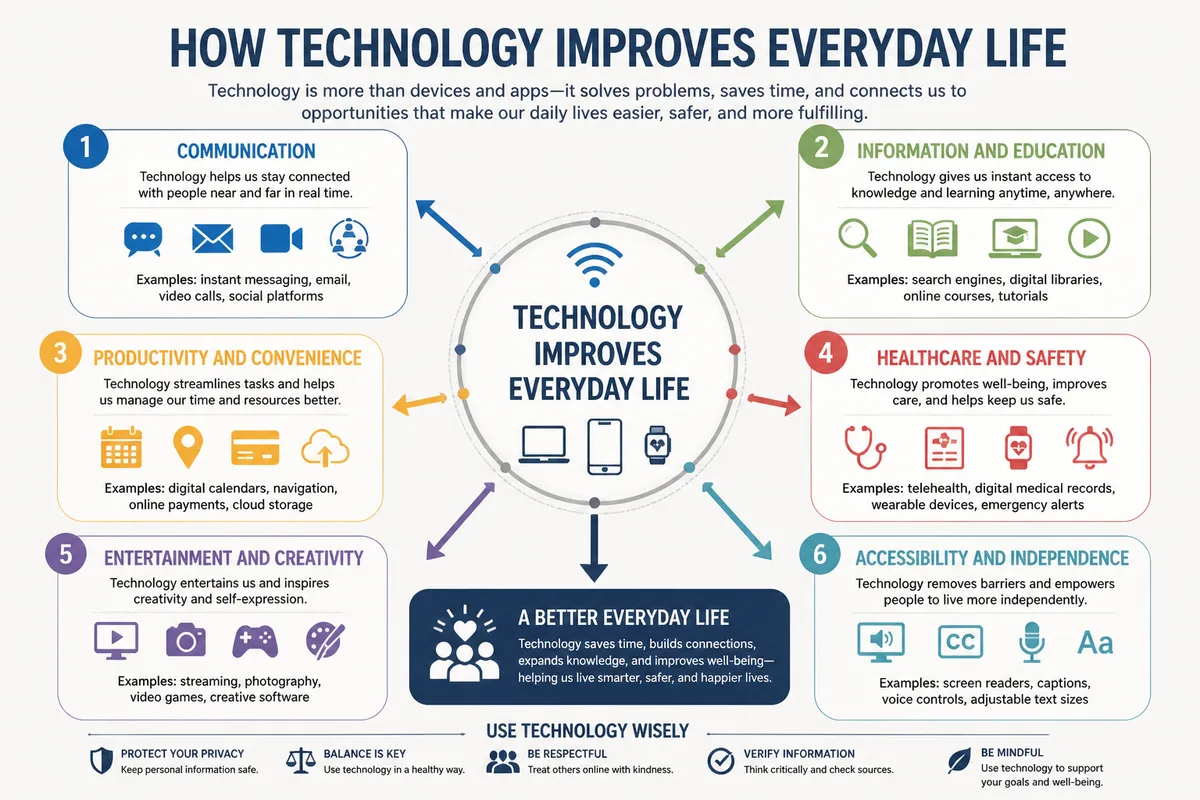
Digital communication is especially valuable for people who have limited mobility or live far from family and services. Nevertheless, constant digital contact does not always create meaningful connection. Short messages may replace deeper conversations, and the pressure to respond immediately can increase stress. Technology works best when it complements, rather than completely replaces, face-to-face interaction and attentive conversation.
Greater Access to Information and Education
Search engines, digital libraries, online courses, tutorials, podcasts, and educational applications have made learning more flexible. Students can review lessons at their own pace, employees can develop new skills, and lifelong learners can study subjects that may not be available locally.
Online resources also help people learn practical skills, from repairing household items to improving language abilities. However, abundant information requires careful judgment. Search results may contain inaccurate, outdated, biased, or deliberately misleading content. Users should check the author, publication date, evidence, and reputation of a source before trusting or sharing important claims.
Higher Productivity and Convenience
Digital calendars, task-management applications, navigation tools, online payments, cloud storage, and automation can save time and reduce repetitive work. Teams can edit documents together, share files instantly, and track project progress without being in the same office. Remote work may also give employees greater flexibility and eliminate some commuting.
Convenience can become a disadvantage when notifications and multitasking interrupt concentration. Frequent task-switching may reduce the quality of work and make people feel permanently available. Turning off unnecessary alerts, organizing digital files, and setting clear working hours can help preserve the benefits of productivity technology.
Improvements in Healthcare and Personal Safety
Telehealth services can provide medical advice to people who live far from clinics or have difficulty traveling. Digital medical records may help authorized professionals access relevant information more efficiently. Wearable devices can monitor activity, heart rate, sleep patterns, or other indicators, while emergency alerts can contact assistance after an accident.
These tools can support prevention and faster communication, but they are not substitutes for professional diagnosis in every situation. Health information is highly sensitive, so users should understand how it is stored, shared, and protected. Strong passwords, secure applications, and careful privacy settings are essential.
More Entertainment and Creative Opportunities
Streaming services, digital photography, video games, e-books, music platforms, and creative software provide affordable access to a wide range of cultural resources. People can watch films from different countries, listen to independent musicians, publish stories, edit videos, or create digital artwork with relatively inexpensive tools.
Technology has also lowered the barriers to sharing creative work. A person can build an audience through a website or social platform without relying entirely on traditional publishers or broadcasters. The challenge is to maintain balance so that entertainment does not replace sleep, physical activity, responsibilities, or offline relationships.
Greater Accessibility and Independence
Inclusive technology can improve independence for people with disabilities and older adults. Screen readers convert text into speech, captions support people with hearing loss, and voice controls help users who cannot operate a keyboard or touchscreen easily. Translation tools, adjustable text sizes, high-contrast displays, and assistive devices can make information and services more accessible.
Accessible design benefits many people beyond its original target audience. Captions are useful in noisy environments, voice commands can help when hands are occupied, and clear interfaces can make online services easier for everyone. Developers and organizations should treat accessibility as a basic requirement rather than an optional feature.
The Main Disadvantages of Technology in Everyday Life
Excessive Screen Time and Digital Distraction
Notifications, social media, games, videos, and constant messages can interrupt work, study, rest, and conversations. Long periods of screen use may contribute to eye strain, poor posture, reduced physical activity, or difficulty disconnecting before sleep. The most important issue is not a single universal time limit, because needs differ between individuals. Instead, people should examine whether technology is affecting sleep, concentration, mood, health, or relationships.
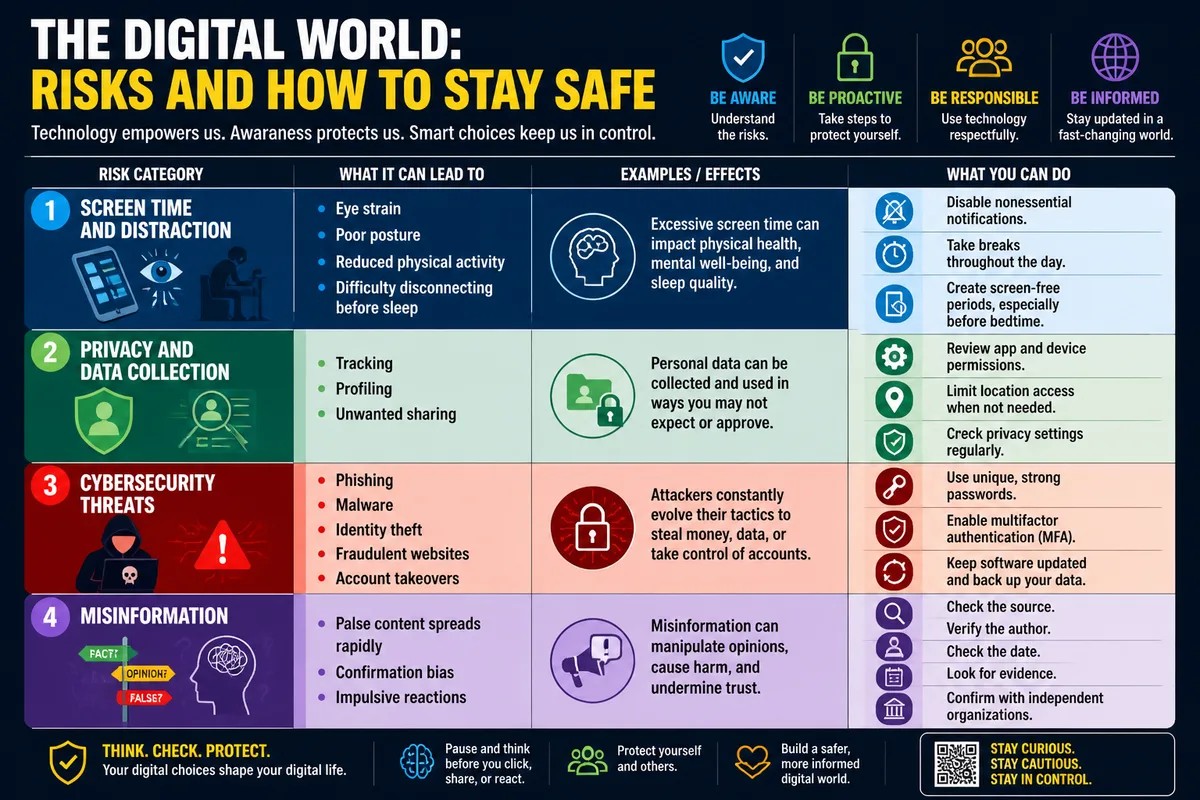
Practical solutions include disabling nonessential notifications, taking regular breaks, keeping devices away during meals, and creating screen-free periods before bedtime. Replacing some digital activities with walking, reading on paper, hobbies, or in-person meetings can restore balance.
Privacy and Data Collection Concerns
Applications, websites, online stores, smart devices, and social platforms may collect information about locations, preferences, contacts, purchases, browsing behavior, and interactions. This data can be used for personalization and advertising, but it may also enable detailed tracking, profiling, or unwanted sharing.
Users can reduce exposure by reviewing application permissions, limiting location access, checking privacy settings, and deleting accounts or applications they no longer need. It is also wise to consider whether a service provides enough value to justify the personal information it requests.
Cybersecurity Threats and Online Scams
Phishing messages, malware, identity theft, fraudulent websites, and account takeovers are serious risks. Criminals may imitate banks, delivery companies, employers, or government services to persuade people to reveal passwords or payment details. Some scams use urgency, fear, or attractive offers to encourage quick decisions.
Basic protection includes using unique passwords, enabling multifactor authentication, installing software updates, backing up important files, and avoiding suspicious links or attachments. People should verify unexpected requests through an official website or trusted contact rather than replying directly to the message.
Misinformation and Reduced Attention
False or misleading content can spread rapidly through social platforms and messaging groups. Recommendation algorithms may repeatedly show material that confirms existing beliefs, making it harder to encounter balanced perspectives. Emotionally charged headlines can also encourage people to react before checking the facts.
Before sharing a claim, check the source, author, date, supporting evidence, and information from independent reliable organizations. A confident tone, large number of views, or attractive graphic does not prove that content is accurate.
Social Isolation and Relationship Challenges
Online communication can strengthen relationships, but it can also reduce face-to-face contact when digital interaction becomes a substitute for personal presence. Social comparison may lead people to feel inadequate when they view carefully selected images of other people’s lives. Online arguments, harassment, and pressure to remain constantly available can further affect mental well-being.
Healthy use involves choosing communication intentionally. A video call with a distant relative may be valuable, while endless scrolling may leave someone feeling disconnected. Quality, purpose, and emotional impact matter more than the number of online interactions.
Impact on Employment and Skills
Automation and artificial intelligence are changing the tasks performed in offices, factories, shops, transport, and customer service. Technology may increase efficiency and create new careers in software, data analysis, cybersecurity, healthcare, and digital design. However, some roles may disappear or change significantly, and workers may face surveillance, job insecurity, or pressure to retrain continuously.
Education systems and employers have an important role in supporting digital literacy, critical thinking, creativity, and adaptable human skills. Technology should improve work conditions rather than simply increase demands on employees.
Environmental Costs and the Digital Divide
Devices require minerals, energy, manufacturing, transportation, and packaging. Data centers and networks consume electricity, while discarded electronics create waste. Frequent upgrades can increase this environmental burden.
People can respond by repairing devices, extending their lifespan, buying durable products, donating working equipment, and recycling electronics through appropriate channels. At the same time, not everyone benefits equally from technology. Unequal access to reliable internet, affordable devices, digital skills, and accessible services can affect education, employment, healthcare, and participation in society.
Advantages and Disadvantages of Technology at a Glance
| Advantage | Possible disadvantage |
|---|---|
| Faster communication across distances | Reduced quality of face-to-face interaction |
| Easy access to information and education | Misinformation and information overload |
| Improved productivity and convenience | Distraction and work-life imbalance |
| Convenient digital services | Privacy and cybersecurity risks |
| Automation and higher efficiency | Job disruption and pressure to develop new skills |
| Accessible entertainment and learning | Excessive use and reduced offline activity |
How to Use Technology More Responsibly
Set Clear Boundaries
- Disable notifications that are not essential.
- Create device-free periods during meals, conversations, and before sleep.
- Separate work communication from personal time whenever possible.
- Review screen habits regularly and identify activities that add genuine value.
Protect Privacy and Accounts
- Use unique, strong passwords and multifactor authentication.
- Review application permissions and privacy settings.
- Keep operating systems, browsers, and applications updated.
- Avoid sharing sensitive information through unsecured or unfamiliar services.
Check Information Before Sharing It
- Verify the source, author, publication date, and supporting evidence.
- Compare important claims with reliable independent sources.
- Be cautious with viral content and emotionally charged headlines.
Choose Sustainable and Accessible Options
- Repair, reuse, donate, or recycle devices through suitable channels.
- Consider durability, energy efficiency, repairability, and accessibility before buying.
- Choose services and products that support inclusive design and responsible data practices.
Frequently Asked Questions About Technology in Everyday Life
What are the main advantages of technology?
The main advantages include faster communication, wider access to information and education, greater productivity, convenient services, improved healthcare access, more entertainment, and stronger accessibility for people with different needs.
What are the biggest disadvantages of technology?
The most significant concerns involve excessive screen time, distraction, privacy loss, cybersecurity threats, misinformation, social isolation, environmental damage, employment disruption, and unequal access to devices and internet services.
Does technology improve quality of life?
Technology can improve quality of life when it solves a real problem, saves time, supports health, or increases independence. The outcome depends on the tool, context, duration of use, and personal habits. A useful application can improve daily routines, while uncontrolled use can create stress and dependency.
How can people reduce the negative effects of technology?
People can set boundaries, protect accounts, review privacy settings, verify information, remain physically active, prioritize offline relationships, take regular breaks, and manage devices responsibly. Small changes, such as removing unnecessary alerts or avoiding screens before bed, can make a noticeable difference.
Is technology making people less social?
Technology can do both. It strengthens distant relationships through messages and video calls, but excessive use may reduce in-person contact and meaningful attention. The effect depends on whether technology supports genuine interaction or replaces it.
Conclusion: Finding a Healthy Balance With Technology
Technology in everyday life offers substantial benefits, from instant communication and flexible learning to healthcare support, accessibility, productivity, and creative expression. It also creates real risks involving distraction, privacy, cybersecurity, misinformation, social relationships, employment, sustainability, and unequal access.
The most responsible approach is intentional and informed use. People should choose tools that serve clear needs, protect their data, check information carefully, preserve offline relationships, and avoid unnecessary consumption. Technology should support daily life rather than control it. A healthy balance allows society to benefit from innovation while maintaining human judgment, well-being, privacy, and connection.