Why Technology Is Important in Daily Life: From Work to Healthcare
Technology is no longer limited to computers, smartphones, or complicated machines. It is part of how people work, communicate, learn, manage money, travel, receive healthcare, and organize their homes. From a digital alarm clock in the morning to an online medical appointment in the afternoon, technology influences countless everyday activities. The importance of technology in daily life comes from its ability to save time, connect people, improve access to services, and support better decisions. However, technology is most valuable when it is used safely, thoughtfully, and inclusively.
What Does Technology Mean in Daily Life?
In everyday language, technology includes much more than physical devices. It covers hardware, such as phones, computers, medical equipment, vehicles, and smart appliances. It also includes software, digital platforms, cloud services, communication networks, and automated systems that help these devices perform useful tasks.
Much of today’s technology works in the background. Cloud systems store information and make it available across devices. Data networks allow applications to communicate in real time. Automation completes routine actions with limited human input. For example, a typical morning may involve an alarm application, a navigation service that checks traffic, a digital payment at a café, and an online news platform that delivers information instantly.
These systems often appear simple from the user’s perspective, but they rely on connected infrastructure, software development, data processing, and security controls. Understanding this broader definition helps explain why technology affects nearly every part of modern life.
How Technology Improves Work and Productivity
Communication and Collaboration
Digital tools have transformed how employees and organizations communicate. Email, instant messaging, video conferencing, shared documents, and project management platforms allow people to exchange information quickly and coordinate tasks efficiently. A team can review the same document, assign responsibilities, track deadlines, and discuss changes without being in the same office.
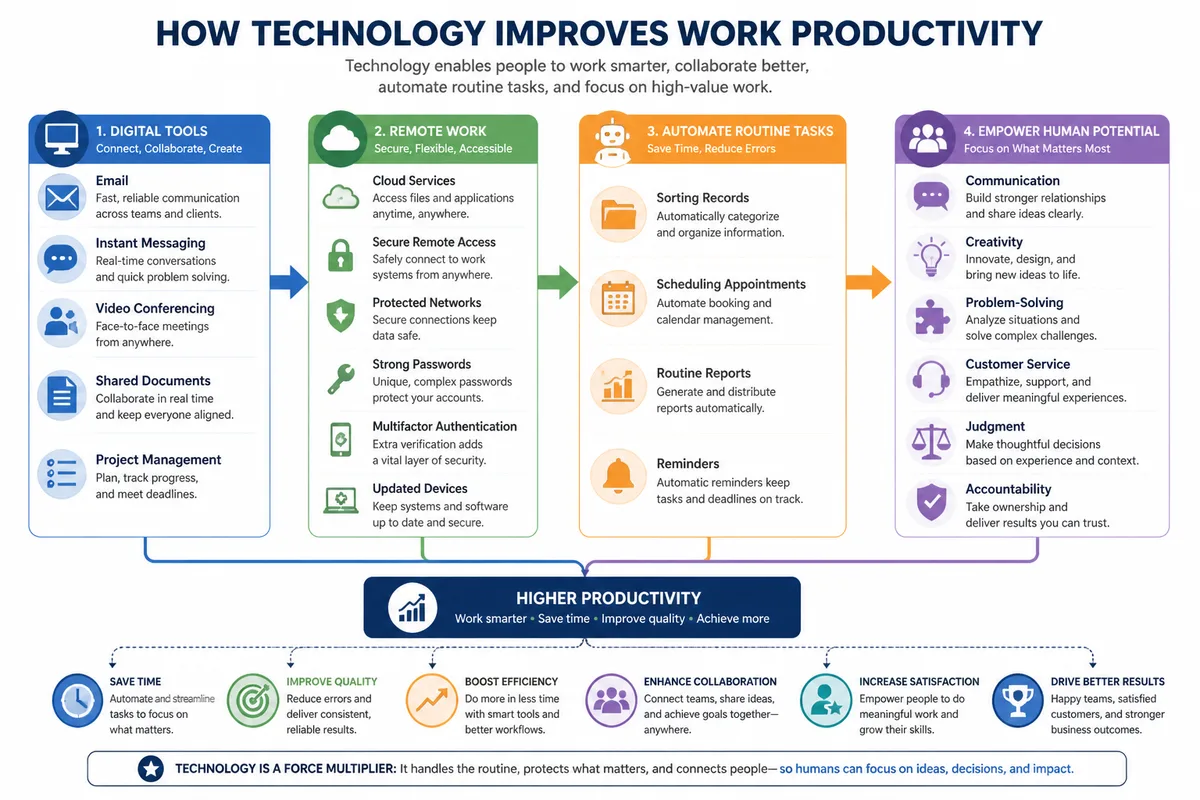
This is especially valuable for distributed and international teams. Employees in different cities or time zones can collaborate on projects, while businesses can serve customers and partners across borders. Translation tools, online calendars, and real-time file sharing further reduce barriers created by distance.
Remote Work and Flexible Workplaces
Cloud services and secure remote access allow many people to work from home, shared offices, or other locations. Employees can access approved files, attend meetings, respond to clients, and complete tasks without being permanently tied to a particular workplace. This flexibility may help organizations attract talent and give workers more options for managing their schedules.
Remote work also requires responsible policies. Clear working hours can help protect personal boundaries, while accessible software ensures that people with different abilities can participate. Cybersecurity is equally important: employees should use protected networks, strong passwords, multifactor authentication, and updated devices when handling company information.
Automation and Better Decision-Making
Automation can reduce repetitive work such as sorting records, scheduling appointments, generating routine reports, or sending reminders. By handling predictable tasks, digital systems can give employees more time for communication, creativity, problem-solving, and customer service.
Technology can also organize large amounts of information and present useful patterns. However, automated recommendations are not a substitute for human judgment. Complex, creative, ethical, and sensitive decisions still require experience, context, accountability, and professional review.
The Importance of Technology in Healthcare
Easier Access to Medical Services
Technology can make healthcare more convenient and accessible. Telemedicine allows some patients to speak with qualified professionals through a video or phone consultation. Online appointment systems make it easier to find available times, while patient portals may provide access to test results, care instructions, prescriptions, and medical messages.
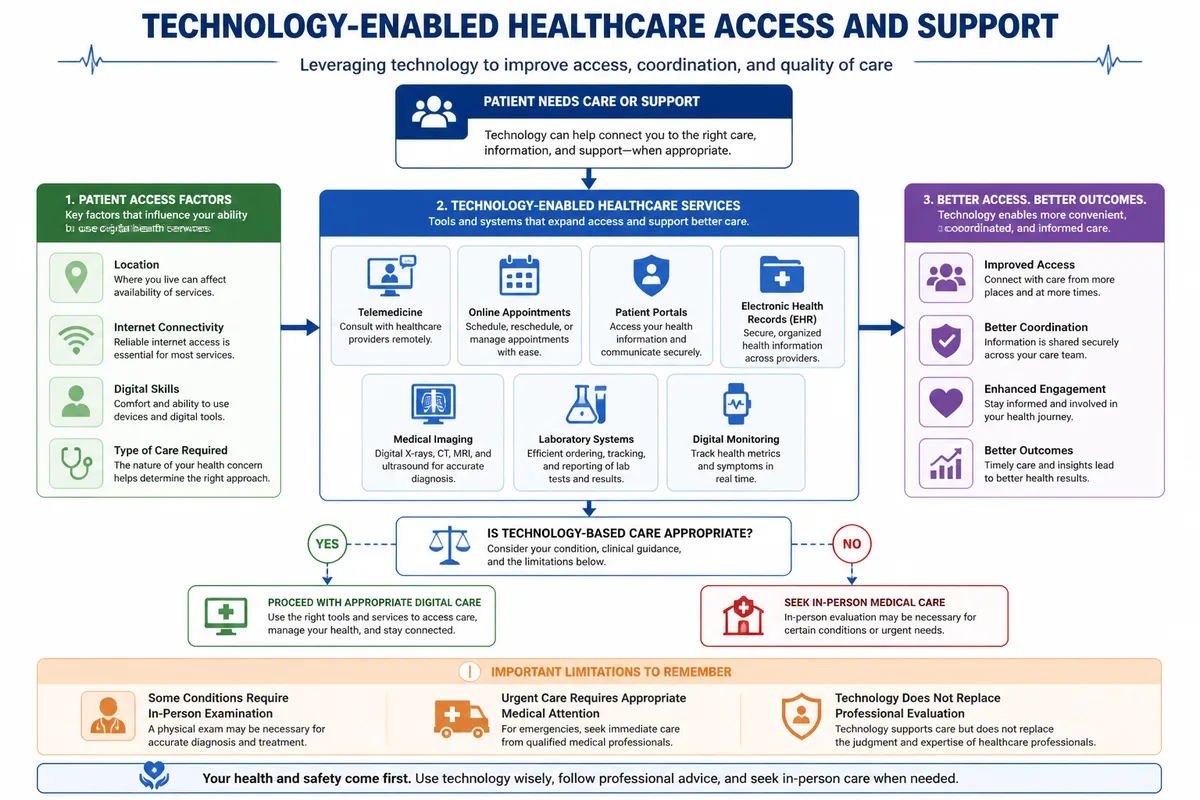
These services are particularly helpful for people who live far from clinics, have limited mobility, or need a follow-up consultation. Nevertheless, availability depends on location, internet connectivity, digital skills, and the type of care required. Some conditions still require an in-person examination or urgent medical attention.
Better Records, Diagnosis, and Treatment Support
Electronic health records help authorized healthcare professionals organize patient information and coordinate care. Medical imaging, laboratory systems, and digital monitoring tools can provide important evidence for evaluation. Clinical decision-support systems may also help professionals identify relevant information or consider possible treatment options.
Technology supports healthcare professionals, but it does not replace professional evaluation. Medical information must be interpreted alongside a patient’s history, symptoms, physical examination, and individual circumstances. Patients should rely on qualified healthcare advice rather than treating an application or online result as a diagnosis.
Wearable Devices and Remote Monitoring
Smartwatches and other connected devices can track selected indicators such as activity, sleep patterns, or heart rate. These tools may encourage awareness and help users notice changes they can discuss with a healthcare professional. Remote monitoring can also support certain care programs by sending approved information to a clinical team.
Consumer measurements can be incomplete, affected by device limitations, or inaccurate in particular situations. They should not be treated as a diagnosis. Anyone with concerning symptoms should seek appropriate professional advice instead of relying only on a wearable device.
How Technology Supports Education and Learning
Technology has expanded access to knowledge through online courses, digital libraries, educational applications, recorded lessons, and virtual classrooms. Learners can study subjects from institutions around the world, review materials at their own pace, and use interactive exercises to practice new skills.
Digital tools can also support personalized learning. Some platforms adjust activities to a learner’s progress, while captions, screen readers, magnification, speech-to-text, and alternative input methods can improve access for people with disabilities. These features are important because inclusive education should not depend on a student’s ability to use a single traditional format.
Technology is most effective when combined with teacher guidance and reliable sources. Educators help students evaluate information, understand difficult ideas, collaborate with others, and develop independent judgment. Balanced screen use is also important, particularly when learning activities can be complemented by discussion, movement, and hands-on practice.
Technology Makes Communication and Information More Accessible
Messaging applications, email, social networks, and video calls allow people to maintain relationships across distance and time zones. Families can share updates, professionals can build networks, and communities can organize around common interests or urgent needs.
Accessibility features make communication available to more people. Automatic captions can support viewers who are deaf or hard of hearing. Screen readers can convert text into speech for people with visual impairments. Translation tools can help users understand content in another language, although translations should be reviewed when accuracy is important.
Easy access to information also creates risks. False or misleading content can spread quickly, especially when emotional headlines encourage people to share before checking. Users should consider the source, publication date, supporting evidence, and agreement with trusted institutions before accepting or forwarding important information.
Everyday Convenience: Banking, Shopping, Travel, and Home Life
Banking and Digital Payments
Mobile banking lets people review balances, transfer money, pay bills, and receive fraud alerts without visiting a branch. Contactless payments can make purchases faster, while budgeting applications may help users understand spending patterns. These conveniences should be combined with account protection, including unique passwords, multifactor authentication, and careful verification of unexpected messages.

Shopping and Delivery Services
Online marketplaces allow consumers to compare products, read reviews, research prices, receive digital receipts, and track deliveries. These services can be especially useful for people with limited transportation or restricted mobility. Shoppers should protect payment details, check seller reputations, compare return policies, and be cautious of offers that appear unrealistic.
Transportation and Connected Homes
Navigation applications provide directions, traffic updates, public transportation information, and estimated arrival times. In the home, connected thermostats, lights, security systems, and appliances may improve convenience or help monitor energy use. However, connected devices can collect data and create security risks. Users should change default passwords, install updates, review permissions, and purchase products from reputable manufacturers.
The Main Benefits of Technology in Daily Life
- Convenience: People can complete many tasks from almost anywhere.
- Efficiency: Automation and digital organization reduce time spent on repetitive activities.
- Connectivity: Families, colleagues, and communities can remain in contact across distance.
- Accessibility: Digital services and assistive features can help more people reach information and essential services.
- Innovation: Technology enables new solutions in healthcare, education, science, transportation, and business.
- Personalization: Some tools can adapt content, reminders, and learning activities to individual needs.
The Disadvantages and Risks of Technology
Privacy and Cybersecurity
Many services collect information about users, including account details, locations, preferences, and online activity. Criminals may use phishing messages, malware, or stolen passwords to access accounts. Practical protections include using unique passwords, enabling multifactor authentication, installing software updates, and limiting unnecessary data sharing.
Digital Divide and Unequal Access
Not everyone has reliable internet, an appropriate device, affordable service, or the digital skills needed to use online systems. Some platforms are also difficult for people with disabilities. Inclusive design, public internet access, affordable connectivity programs, digital education, and accessible customer support can help reduce these inequalities.
Screen Dependence and Well-Being
Unplanned technology use can contribute to distraction, reduced offline interaction, sedentary routines, and weak boundaries between work and rest. A healthier approach is to use devices purposefully, schedule breaks, protect sleep routines, and make time for movement and face-to-face relationships. Technology should support life rather than dominate every moment.
Employment and Social Change
Automation may change job tasks and increase demand for digital skills. This can create opportunities while also causing uncertainty for some workers. Training, adaptability, communication, creativity, and critical thinking remain valuable because human skills are important in situations that require empathy, judgment, and original ideas.
How to Use Technology Responsibly and Safely
- Use unique passwords and multifactor authentication for important accounts.
- Install operating system, application, and security updates promptly.
- Download software from reputable sources and avoid suspicious links or attachments.
- Review privacy settings and limit unnecessary permissions.
- Use secure networks when banking, shopping, or handling sensitive information.
- Verify information before sharing it with others.
- Choose accessible, inclusive tools whenever possible.
- Balance digital activities with rest, movement, offline interests, and personal relationships.
What Does the Future of Everyday Technology Look Like?
Artificial intelligence, connected devices, robotics, immersive tools, and personalized services are likely to influence daily routines further. Some of these capabilities already exist in limited forms, while others remain future possibilities. AI can assist with writing, analysis, translation, and recommendations, but its results may contain errors or reflect incomplete information.
The future should focus not only on what technology can do, but also on how it affects people. Ethical design, transparency, privacy protection, accessibility, and human oversight will be essential. New tools should be evaluated according to safety, fairness, reliability, and real user needs.
Frequently Asked Questions About Technology in Daily Life
Why is technology important in daily life?
Technology is important because it supports communication, work, healthcare, education, banking, transportation, and access to information. It can save time and make services more convenient, although people must use it securely and thoughtfully.
How does technology improve healthcare?
Telemedicine, electronic records, medical imaging, digital laboratory systems, and remote monitoring can improve access and support professional care. These tools have limitations and should not replace qualified medical evaluation.
What are the main disadvantages of technology?
Major concerns include privacy loss, cybersecurity threats, misinformation, unequal access, excessive screen use, and changes to employment. Good policies, digital education, and responsible personal habits can reduce these risks.
How does technology affect the workplace?
It enables collaboration, remote work, automation, faster access to information, and improved productivity. At the same time, workers may need new skills as tasks and job requirements change.
Can technology improve education?
Yes. Online resources, digital libraries, virtual classrooms, interactive applications, and accessibility features can make learning more flexible and inclusive. Teacher guidance and reliable information remain essential.
How can people use technology safely?
People should protect accounts, update devices, review privacy settings, use secure networks, verify information, and avoid sharing sensitive details unnecessarily. Regular breaks and healthy offline routines also support balanced use.
Conclusion: Making Technology Work for People
Technology is important in daily life because it expands access, saves time, connects people, and supports essential services from work to healthcare. It can make learning more flexible, communication more accessible, and ordinary tasks more convenient. Its value, however, depends on responsible design, informed use, privacy protection, and digital inclusion.
The practical lesson is simple: use technology intentionally. Protect your information, question unreliable content, choose accessible tools, and maintain time for rest and human connection. When technology works for people rather than controlling them, it can improve daily life while supporting security, well-being, and opportunity.