How to Update Your Home With No Money Using What You Already Own
How do you update your home with no money? Start with the items, space, and time already available to you: declutter, clean deeply, rearrange furniture, change room functions, and restyle objects you own.
A no-buy home refresh will not replace unsafe repairs or major remodeling, yet it can make a room feel clearer, brighter, and more intentional without adding a purchase to your budget. The strongest results usually come from changing what the eye sees first.
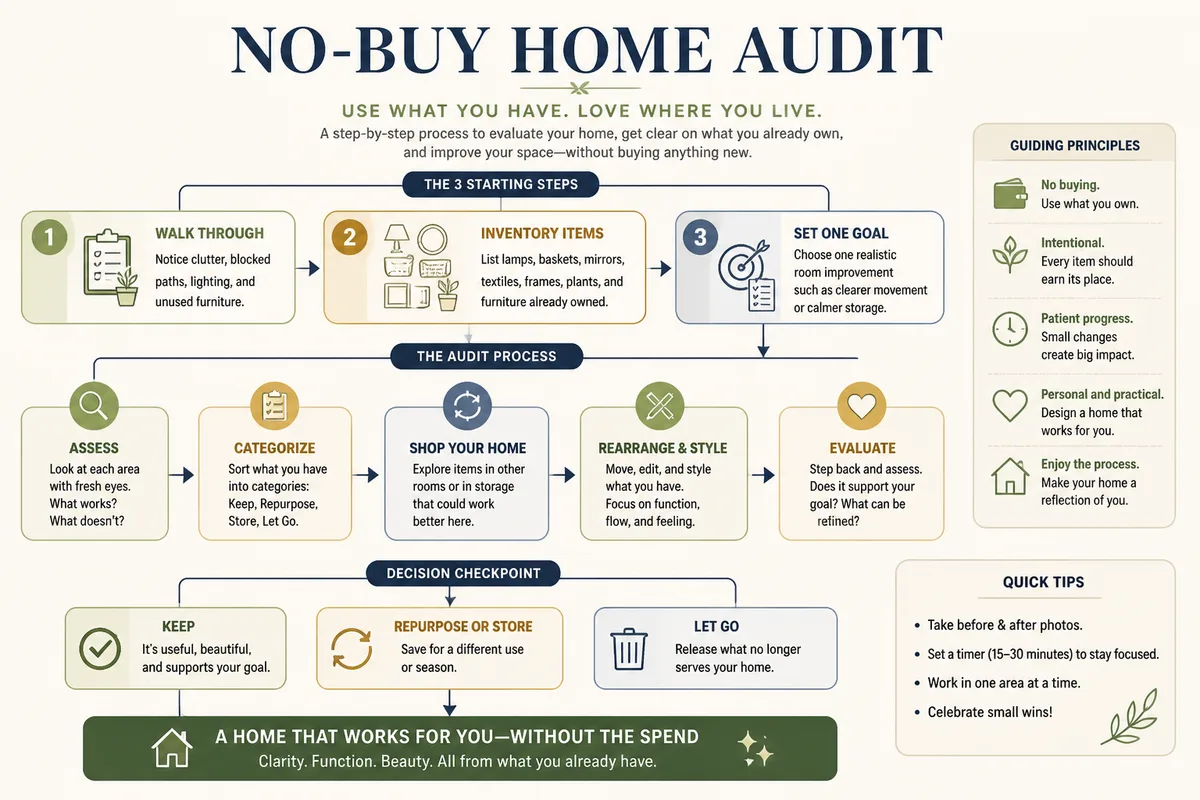
Start with a no-buy home audit
Walk through your home before moving anything. Look for crowded surfaces, blocked pathways, unused furniture, poor lighting, and objects that belong elsewhere; these details often create the biggest visual problems and cost nothing to correct.
Walk through every room with fresh eyes
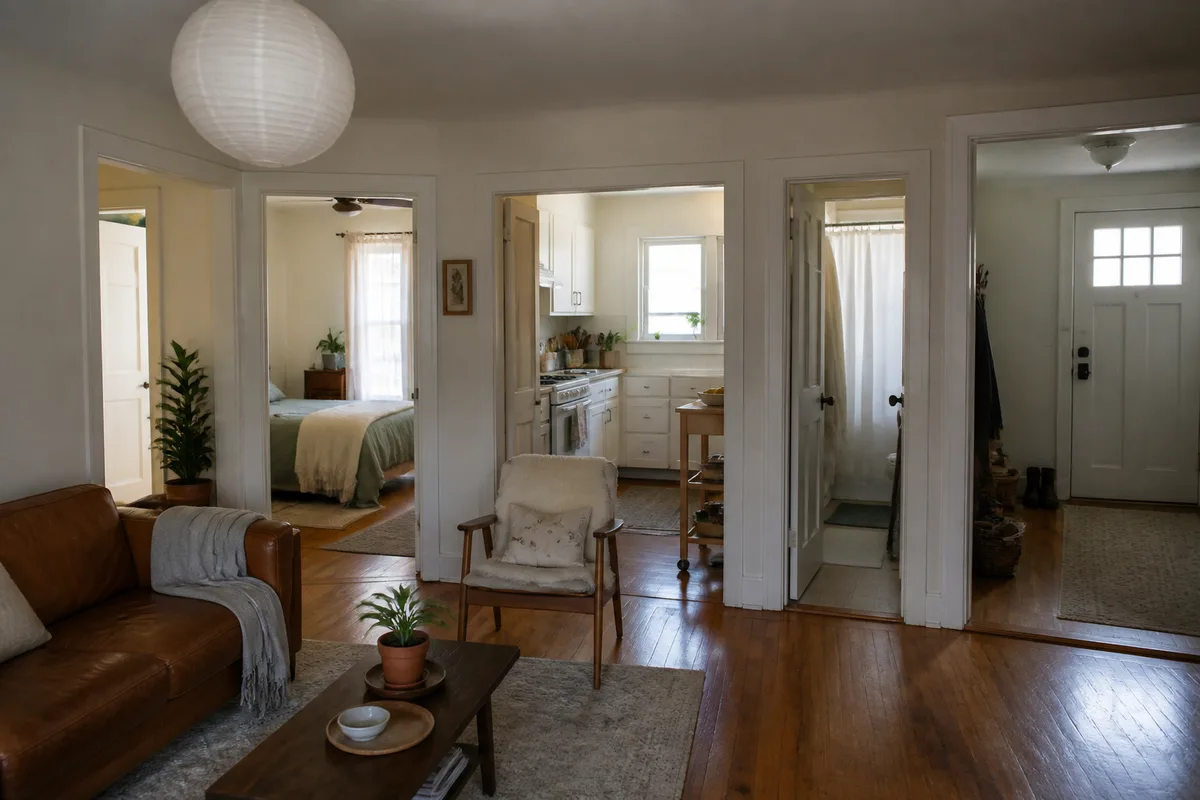
Enter each room as if you were visiting for the first time. Notice the first object you see, the easiest route across the floor, and the surfaces that collect visual clutter.
Take one photo from the doorway.
Use the image as a neutral review tool. A doorway photograph often reveals furniture that interrupts movement, artwork hung too high, or accessories scattered without a clear relationship.
Make an inventory of what you own
List spare lamps, baskets, mirrors, frames, throws, plants, stools, containers, artwork, leftover fabric, and furniture stored in other rooms. Include items that need cleaning or a minor repair because their current condition may hide their usefulness.
Group similar items together.
Finish the audit by choosing one realistic goal, such as opening the living-room walkway, making the bedroom calmer, or creating a usable work corner from an existing table.
Declutter and deep-clean before decorating
Decluttering and cleaning create the fastest free home makeover because they remove visual noise before new arrangements compete for attention. Clear floors, clean glass, dust neglected edges, and wash removable textiles before deciding that a room needs different decor.
Use the keep, move, store, and let-go method
Pick up each visible object and assign it to one category: keep it here, move it elsewhere, store it safely, or let it go. Avoid creating a fifth pile for decisions you will postpone indefinitely.
Clear one surface completely.
Start with the most visible area, such as a coffee table, kitchen counter, entry console, or bedside table, then return only objects that serve a practical or personal purpose.
Clean details that change the atmosphere
Wash windows and mirrors, vacuum edges, wipe lampshades carefully, clean cabinet fronts, refresh cushions, and remove fingerprints from doors and handles. These jobs matter because dust and residue reduce the contrast between light surfaces and darker objects.
Do not mix cleaning products.
Follow each product label, ventilate the room, and avoid using water on electrical components, delicate finishes, or materials that require specialist care.
Start with what you already own.
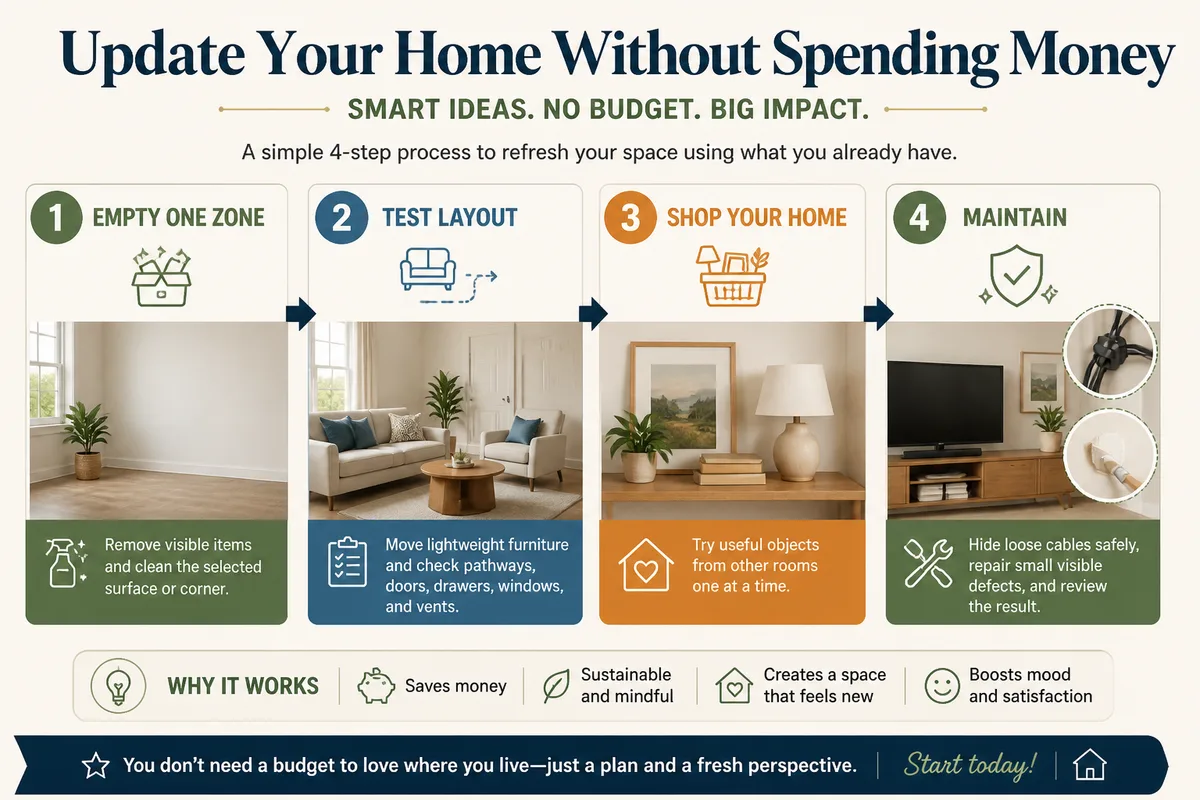
How to update your home with no money: the steps
Follow a fixed order: remove excess, improve cleanliness, test a new layout, restyle useful objects, and review the result in daylight. This sequence prevents you from decorating around clutter and helps reveal whether the room needs an item at all.
-
Step 1: Empty one visual zone
Choose a surface or corner, remove every movable item, and clean the area. Photograph the empty space before returning anything; the image gives you a useful baseline for judging whether the final arrangement feels lighter.
Keep the first zone small.
The expected result is a clearly defined area with less visual competition and enough room to make a deliberate choice.
-
Step 2: Test the furniture layout
Move lightweight furniture first, leaving heavier pieces until you know the direction works. Keep walkways open, position seating toward conversation or a view, and avoid forcing every item against a wall when the room allows another arrangement.
Measure nothing at first.
Walk through the room several times and check doors, drawers, windows, heating vents, and safe access before accepting the layout.
-
Step 3: Shop the rest of your home
Collect objects from other rooms and test them in the refreshed area one at a time. A spare basket may organize blankets, a dining chair may support a desk, or a mirror may improve light in a darker hallway.
Move objects temporarily.
Live with the arrangement for a few hours, then remove anything that blocks use, creates unnecessary maintenance, or feels unrelated to the room.
-
Step 4: Finish with maintenance
Hide loose cables safely, straighten textiles, repair small visible defects, and return essential items to convenient locations. Finish before starting another room so the change becomes usable rather than another unfinished project.
Stop when the room works.
A successful zero-budget update improves movement, storage, light, or comfort; it does not require filling every empty surface.
Free room-by-room refresh ideas
Each room needs a different free intervention: the living room benefits from better conversation flow, the bedroom from visual calm, and the kitchen from cleared work surfaces. Use the items already present, then change their position or purpose before considering any purchase.
Living room
Pull seating into a conversation-friendly arrangement, remove furniture that blocks the main route, and group books or objects by use instead of scattering them across several surfaces. Rotate a lamp, plant, mirror, or artwork from another room to create one clear focal point.
Keep one open pathway.
For a small living room, fewer visible pieces usually create more breathing space than adding decorative layers.
Bedroom
Clear the floor, reduce bedside clutter, and move a chair, stool, or small table into a useful position for clothing or reading. Fold spare blankets neatly and use the most visually calming textiles on the bed.
Remove work materials first.
If the bedroom also serves as an office, place work items into one container at the end of the day so the room can return to a resting function.
Kitchen and dining area
Clear the main preparation surface, group frequently used utensils together, and relocate appliances that rarely serve the current routine. A tray, bowl, or unused container may collect everyday items without requiring new storage.
Protect food-contact surfaces.
Never use containers for food storage unless their material and condition are suitable for that purpose, and keep cleaning chemicals away from food and preparation areas.
Bathroom and entryway
In the bathroom, remove empty packaging, clean mirrors and fixtures, and organize daily products by frequency of use. In the entryway, place shoes, bags, and coats where they naturally land, using existing baskets, hooks, or furniture.
Keep exits clear.
Renters should avoid permanent alterations and should check their lease before drilling, repainting, replacing fixtures, or attaching adhesive products.
Repurpose, swap, sell, or borrow
Repurposing extends a no-buy home update when the original use of an object no longer fits your life. Before purchasing storage or decor, test whether a container, chair, frame, textile, or piece of furniture can solve a current problem in a different room.
Give old furniture a new role
Use a sturdy stool as a plant stand, a small table as a bedside surface, or a dresser as storage outside the bedroom. Check stability before changing an item’s purpose, and keep heavy objects low enough to reduce tipping risk.
Stability comes first.
Do not modify load-bearing furniture, drill into unknown materials, or use damaged pieces where a collapse could injure someone.
Swap and borrow locally
Ask trusted friends, relatives, neighbors, or local community groups about temporary decor swaps, spare paint, unused baskets, or furniture awaiting a new home. A swap works best when you agree on condition, timing, ownership, and return expectations before taking an item.
Write down the arrangement.
For used goods, inspect for damage, moisture, pests, odors, and unsafe wiring before bringing anything indoors.
Sell unused items strategically
Sell decor, duplicate furniture, or accessories that no longer serve your household, then reserve the proceeds for one targeted improvement rather than several impulse purchases. Reusing or selling items keeps the project focused on solving a visible problem.
Choose one upgrade only.
Do not treat an informal sale price as a guaranteed budget because demand, condition, location, and platform fees may change the amount received.
A small home often benefits from fewer objects.
How does a no-buy refresh compare with paid alternatives?
A no-buy refresh is the right first choice for appearance, organization, and layout problems; buying new decor helps only when an essential function remains missing. Borrowing or sourcing used items sits between the two, adding access without immediately committing to full retail spending.
| Approach | Best use | Main limitation | Recommendation |
|---|---|---|---|
| Use what you own | Clutter, layout, styling, storage, and room function | Requires time and willingness to experiment | Choose this first for visual changes |
| Borrow or swap | Testing furniture, textiles, or decor temporarily | Condition, timing, and ownership need agreement | Choose this when an item is useful but not essential to own |
| Buy one targeted item | A missing function that existing belongings cannot solve | Creates a cash cost and may expand the project | Choose this only after testing free alternatives |
Buying new decor is the wrong first move here. Test rearrangement, cleaning, and repurposing before spending money on an object that may duplicate something you already own.
Common mistakes that weaken a free home makeover
Zero-budget projects fail when the process creates more clutter, ignores how a room functions, or applies decorative advice to a safety problem. Avoid these specific traps so the refresh improves daily life rather than producing a temporary rearrangement that quickly collapses.
- Moving everything at once: You lose track of what improved the room. Change one zone or furniture group, then evaluate the result before continuing.
- Keeping every object visible: Sentimental value does not require constant display. Store rotating collections safely and show fewer pieces at a time.
- Blocking circulation for appearance: A visually balanced layout fails when doors, drawers, windows, or walkways become difficult to use.
- Using unsafe materials or furniture: Do not improvise electrical, gas, plumbing, structural, or unstable furniture work. Consult a qualified professional for repairs involving serious risk.
- Believing free government money is universal: The U.S. federal government does not offer general free money to every individual for home improvements. Targeted local, state, HUD, utility, insurance, or disaster programs require current eligibility checks.
Decor problems need decor solutions.
Essential repairs need a separate decision.
What to do when the problem is an essential repair
Cosmetic changes address appearance; leaking roofs, unsafe wiring, gas problems, structural damage, failed heating, and serious water issues require prompt repair planning. Before using credit, check official assistance sources and your insurance policy, then confirm eligibility, deadlines, repayment, and contractor requirements.
Check assistance before borrowing
For U.S. homeowners, start with USAGov home repair assistance information, your state or local housing office, HUD resources, utility weatherization programs, and disaster assistance when relevant. Eligibility may involve income, age, property type, location, ownership, or damage cause.
Verify every program directly.
Advertisements promising guaranteed grants or instant free repair money deserve caution, especially when they request upfront fees, personal banking details, or urgent payment.
Review insurance and financing carefully
Insurance may cover certain storm or accidental damage when the event and repair fall within the policy, although exclusions, limits, documentation requirements, and deductibles apply. A HELOC, home-equity loan, personal loan, or credit card creates repayment obligations and should never be described as free money.
Do not borrow for decoration.
When borrowing becomes unavoidable for essential work, compare the total repayment, variable-rate exposure, collateral risk, fees, and consequences of missed payments using current lender documents rather than a generic online estimate.
A one-day no-buy home update plan
A single day works best when you limit the project to one or two rooms and follow a strict order. Use the morning for removal and cleaning, the afternoon for layout experiments, and the evening for styling, review, and maintenance.
Morning: reset the space
Remove rubbish, laundry, duplicate objects, and items that belong elsewhere. Clean the most visible surfaces, vacuum accessible floors, wash mirrors, and open curtains or blinds where safe and appropriate.
Finish one room first.
Afternoon: change the layout
Move lightweight furniture, test two arrangements, and photograph each version from the doorway. Select the layout that improves movement and supports the room’s primary use rather than the layout that simply fills empty corners.
Leave pathways open.
Evening: style and maintain
Return only useful or meaningful objects, group similar items, fold textiles, and place everyday belongings where they are easiest to reach. Record what worked and what should move back before starting another room.
Stop before fatigue creates mistakes.
Sources useful for repair and assistance checks
Official sources matter when a home problem involves money, eligibility, insurance, or safety. Use them to verify current conditions rather than relying on social media posts, unsolicited messages, or advertisements that promise universal grants.
- USAGov: Home repair assistance, program scope, and scam warnings. Use it as a starting point for U.S. federal and local resource checks.
- HUD: Housing repair and rehabilitation program information. Confirm current program rules, approved lenders, and eligibility directly.
- Your utility provider: Possible energy-efficiency or weatherization support. Check service territory, income requirements, covered measures, and application dates.
- Your insurer: Covered damage, exclusions, deductible, claim deadlines, and documentation requirements. Read the policy and keep photographs, invoices, and inspection records.
- Local housing office: City, county, or state repair programs. Confirm whether the program serves owners, renters, seniors, low-income households, or specific property types.
Final checklist for a free home refresh
Before calling the project complete, confirm that the room is cleaner, easier to move through, and better suited to its daily purpose. A successful update uses fewer unnecessary objects, makes existing belongings work harder, and leaves essential repairs clearly identified for proper follow-up.
- Photograph the room before changing it.
- Remove clutter from floors and major surfaces.
- Deep-clean visible, neglected details.
- Test at least one new furniture layout.
- Move useful objects between rooms.
- Repurpose only stable, suitable items.
- Keep exits, vents, doors, and walkways clear.
- Separate cosmetic updates from urgent repairs.
- Verify assistance through official sources.
- Review the result in daylight before spending money.