How Rail Travelers Can Stay Connected When Calling International Numbers from France
Rail travelers in France can make international calls reliably by using the correct country code, checking their mobile plan, and preparing for weak signal areas along the route. The safest approach combines mobile roaming or a local data option with an alternative such as station Wi-Fi or an internet calling app.
A moving train creates practical problems that a normal phone call may not: the handset changes network cells, tunnels interrupt coverage, and a cross-border journey can change roaming conditions. Before departure, save the number in international format, confirm the destination country code, and check whether your operator bills calls, data, or voicemail separately.
What should rail travelers check before making an international call from France?
Before calling abroad from a French station or train, check three points: the number format, your connection, and the price charged by your operator. A call can fail because the number still contains a domestic prefix, while a successful call can become expensive when the destination falls outside your plan.
Save every important number in international format before boarding. Use the plus sign followed by the destination country code and the national number, usually without its initial trunk prefix. The exact rule belongs to the destination country, so verify unusual numbering systems before relying on the call.
Then check whether your plan includes international voice calls or only roaming within a defined region. An allowance for using your French SIM while travelling abroad may cover mobile data and calls made from another country, while calls from France to a foreign number can follow a separate tariff.
- Confirm the destination country code.
- Remove the domestic trunk prefix when the destination numbering plan requires it.
- Check international call rates in your operator’s customer area.
- Download essential contact details for offline access.
- Keep a text-based alternative ready if voice service fails.
Why do calls fail on a moving train?
Calls from trains fail mainly because coverage changes along the route, especially inside tunnels, cuttings, forests, and large stations. A phone may show a signal while the call still drops because the device is switching between network cells or moving through an area where the railway corridor has limited coverage.
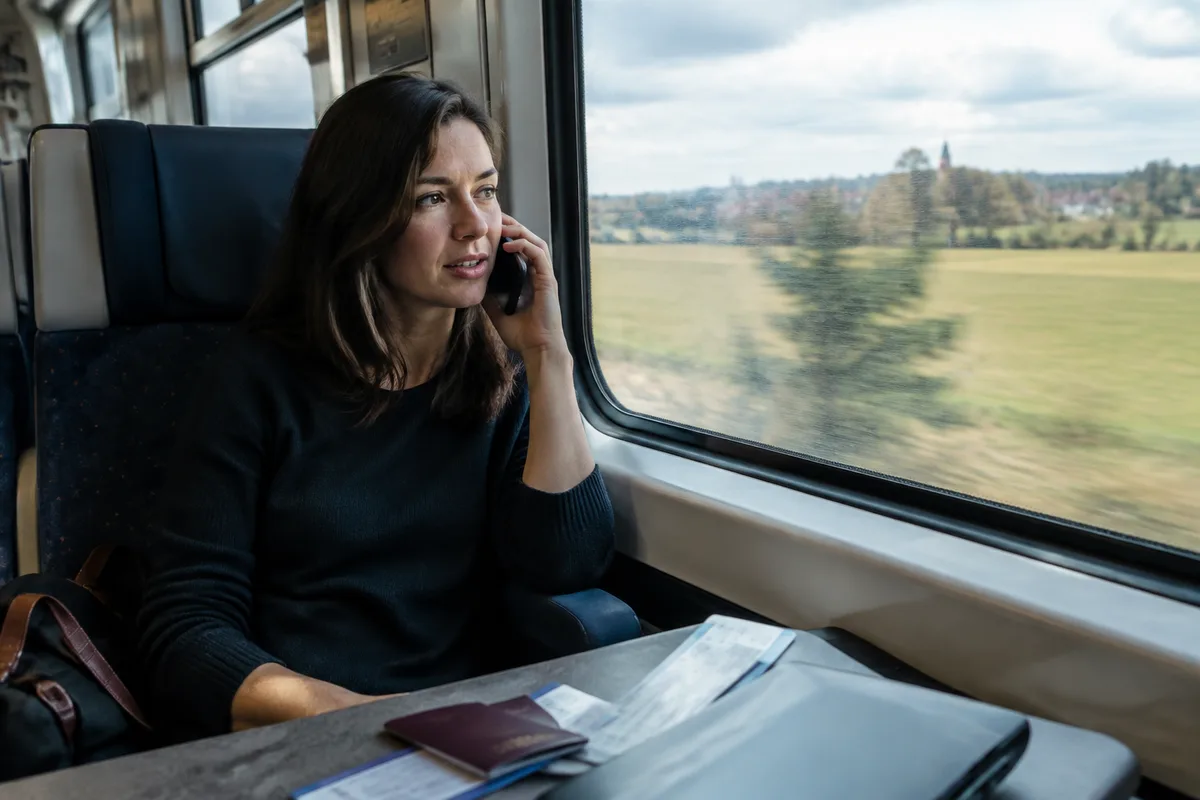
Train speed matters less than the quality and continuity of the network along the track. A call may work beside a platform, become distorted after departure, and recover several minutes later without any change to the phone settings.
However, passengers can reduce interruptions by calling during a long open section of the route, moving away from a metal-lined area when permitted, and avoiding important conversations immediately before a tunnel or border crossing.
For an urgent call, send a short message first. Ask the recipient to call back only when the train reaches a reliable coverage area.
How do you dial an international number from France?
From France, an international number is normally entered with a plus sign, the destination country code, and the national number in the format required by that country. The common alternative is the international access prefix used from France followed by the same country code, although the plus format is easier to save and reuse while travelling.
For example, a French contact calling a number in another country should replace the destination’s domestic access pattern with its country code when that country’s numbering plan requires it. The initial zero in a national number is often removed after the country code, yet that rule is not universal.
Do not copy a number from a website without checking its spacing, punctuation, or local prefix. A contact saved as a domestic number may work in one country and fail as soon as you try to call it from France.
For a country-by-country explanation of international prefixes and number formats, consult IndicatifsTelephoniques before departure, then test the number with a brief call if the cost is acceptable.
Which connection is best: roaming, Wi-Fi, or mobile data?
Mobile roaming is usually the simplest option for a short rail journey, provided your plan clearly covers calls from France to the destination country. Wi-Fi calling or an internet calling app can help when voice tariffs are high, while a local SIM or eSIM may suit a longer stay that requires regular data and voice access.
| Connection | Best use | Main limitation |
|---|---|---|
| French mobile plan | Short calls with a known tariff | International voice charges may apply |
| EU roaming allowance | Travel within covered European zones | Country and fair-use conditions must be checked |
| Train or station Wi-Fi | Messaging and internet-based calls | Coverage, login, and stability vary |
| Local SIM or eSIM | Longer stays and frequent data use | May provide a new number and require setup |
Choose the mobile plan when the call is important and the tariff is clear. Choose an internet call when the recipient can use the same service and the connection is stable. A second method is worth preparing because railway Wi-Fi can require a portal login, and mobile coverage may disappear in the next tunnel.
Wi-Fi calling also has a technical condition: the phone and operator must support the feature, and the service may treat calls according to the operator’s own billing rules. Turning on Wi-Fi does not automatically make every international call free.
A useful test is simple. Connect before boarding, call a trusted contact for a few seconds, and confirm that the recipient hears you clearly.
What changes on night trains and cross-border routes?
Night trains and international routes require extra preparation because the traveler may cross several network areas while sleeping or moving between countries. The phone can reconnect to a foreign network, lose service inside a tunnel, or display a roaming message at a border, so important calls should be arranged before departure.
On a night train, keep the phone charged and store the contact number offline. A power socket may be unavailable, occupied, or incompatible with your charger, and quiet-carriage rules can make a long conversation inappropriate even when the signal is strong.
Cross-border journeys also change the commercial context. A call made while physically in France, a call made after entering another country, and a call to a foreign number from either location can fall under different tariff categories.
For travel within the Schengen area, border controls may be limited in ordinary conditions, yet that does not remove the need to carry a valid identity document. Travelers heading to the United Kingdom or another destination outside the Schengen area should verify entry documents with the relevant official authority before departure.
Do not rely on a single network for a time-sensitive call.
How can travelers prepare for weak signal and expensive calls?
A reliable rail travel communication plan uses preparation rather than a last-second call from the platform. Save the number, identify the country code, verify the tariff, and prepare a message that explains when you will reconnect if the voice call breaks up.
- Save the number correctly. Use the international format and store the contact under a recognisable name.
- Check the tariff. Look specifically for calls from France to the destination country, not only for roaming abroad.
- Prepare a backup channel. Keep text messaging or an internet calling application available.
- Charge before departure. A weak signal can increase battery use because the phone repeatedly searches for a network.
- Choose the right moment. Avoid tunnels, departure announcements, and sections where the train has repeatedly lost coverage.
- Confirm the result. Send a short message if the call drops instead of repeatedly redialling in a poor-signal area.
Repeated redialling is the wrong response to a network gap. Wait until the train reaches open track, then try once with the number already checked.
Travelers who use GPS-based rail applications can also review how positioning behaves during a journey in this explanation of GPS on rail journeys, especially when the phone moves through tunnels or areas with limited reception.
How should international call costs be verified?
International call costs must be verified in the operator’s current tariff because the price depends on the destination, the type of number, and the plan used. A foreign mobile number, premium number, voicemail service, or call made after a border crossing may be billed differently from an ordinary landline call.
Read the tariff before the journey.
Look for these specific entries:
- calls from France to the destination country;
- calls to mobile numbers rather than fixed lines;
- calls made while roaming outside the plan’s covered area;
- special, premium-rate, satellite, or service numbers;
- internet calls that consume mobile data instead of voice minutes.
Promotional bundles can have eligibility dates, usage limits, or exclusions. A price shown in an application may also apply only to one plan or one billing period, so the operator’s current customer documentation should take priority over an old travel forum or an archived tariff.
What should rail travelers do if a call fails?
If an international call fails, first confirm the number format and check whether the phone is connected to a mobile network or Wi-Fi. Then try a message, wait for a clearer section of track, and use the operator’s support channel if several correctly formatted numbers fail.
When the call drops, avoid assuming that the recipient’s phone is responsible. The interruption may come from a tunnel, a temporary handover between network cells, a congested station network, or a roaming restriction.
Write down the time, train section, country, and error message if the problem continues. Those details help the mobile operator distinguish a billing block from a coverage problem.
For a medical, security, or railway emergency, use the emergency instructions displayed by the railway and station authorities rather than relying on an international contact number.
Frequently asked questions
Can I call an international number from a French train?
Yes, if your phone has network access or a working internet connection and your plan permits the call. The call may drop in tunnels or weak-coverage areas, so prepare a text-based backup.
Should I use the plus sign when saving a foreign number?
Usually, yes. The plus sign followed by the country code creates a portable international format, although the destination country’s numbering rules still determine whether a domestic prefix must be removed.
Does European roaming automatically make international calls free?
No. Roaming rules and calls from France to a foreign number are separate billing situations in many plans. Check the exact tariff for the destination and the type of number before calling.
Is train Wi-Fi reliable enough for international calls?
It can support an internet call when the connection is stable, yet it may require a portal login or disappear in tunnels. Use it as a useful option, not as the only method for an urgent conversation.
Key points
- Save foreign numbers with the correct country code before boarding.
- Check international call charges separately from roaming allowances.
- Expect signal interruptions in tunnels, stations, and remote rail sections.
- Keep messaging or internet calling as a backup.
- Verify current tariffs and service conditions with your mobile operator.