Common Trip Planning Mistakes That Cost You Time and Money
Common trip planning mistakes rarely begin with a dramatic failure. More often, they start with a budget that excludes transport fees, a connection that leaves no margin, or a booking made before checking the travel documents required for the route.
A smoother trip does not require planning every minute. It requires checking the expensive and time-sensitive details early, comparing the real cost of each option, and leaving enough flexibility for delays, weather, queues, and changes.
Quick Summary
- 🧾 Build a total-trip budget, including baggage, transport, taxes, food, insurance, connectivity, and an emergency reserve.
- 🕒 Calculate door-to-door travel time instead of relying only on the flight or train duration.
- 🔎 Compare the final cost and restrictions, not just the advertised fare or nightly rate.
- 🛂 Verify entry requirements through official sources before paying for non-refundable reservations.
- 📱 Keep offline backups of documents, addresses, tickets, insurance contacts, and payment options.
The trip planning mistakes most likely to derail your budget and schedule
The most disruptive errors are incomplete budgeting, rushed itineraries, misleadingly cheap bookings, missed entry requirements, weak arrival planning, and having no backup when plans change. They can turn a short delay into a missed reservation or make a low fare more expensive than a better-located alternative.
The goal is not to control every minute. Plan the elements that are costly or difficult to replace, then leave flexible blocks for delays, weather, rest, and discoveries.
| Mistake | Typical consequence | Priority | Preventive action |
|---|---|---|---|
| Budgeting from headline prices | Unexpected fees and insufficient funds | Before booking | Record the complete estimated trip cost |
| Overloaded itinerary | Missed reservations and fatigue | Before booking | Calculate realistic door-to-door time |
| Choosing the cheapest booking | Long transfers, restrictions, and extra charges | Before paying | Compare total cost, time, and flexibility |
| Late document checks | Denied boarding or unusable reservations | Before payment | Use government, embassy, airline, and provider sources |
| No contingency plan | Higher costs during disruption | Before departure | Prepare backups for transport, money, documents, and communication |
Mistake 1: Setting a headline-price budget instead of a total-trip budget
A flight and hotel price do not represent the full cost of a trip. A usable budget must also include daily spending, local transport, food, activities, insurance, taxes, tips, connectivity, and money reserved for unexpected changes.
Review the running total after every major booking. This simple habit shows whether a cheaper flight has consumed the money intended for activities, or whether a central hotel could reduce expensive daily transfers.
Hidden travel costs that are easy to miss
Common additions include checked baggage, seat selection, resort or city taxes, cleaning charges, airport transfers, booking fees, foreign transaction fees, exchange-rate markups, and luggage storage. The exact amount is commercial and destination-specific, so confirm it on the provider’s final checkout page rather than relying on the starting price.
For example, a booking displayed at $500 is not a $500 trip component if a $60 baggage charge, $35 seat fee, and $25 booking fee appear before payment. The figures in this example are illustrative, not a current market quote.
How to build a usable emergency buffer
Keep contingency funds separate from the activity budget. The reserve should reflect the trip length, destination costs, number of connections, distance between stops, cancellation exposure, and how difficult it would be to replace transport or accommodation.
A short domestic break with refundable reservations may need a smaller reserve than a multi-stop international journey with separate tickets and limited local transport. Do not use the emergency fund to justify adding another fixed activity.
Practical budgeting basics can help travelers separate planned spending from money that should remain available for surprises.
Mistake 2: Building an itinerary that looks efficient but is impossible in practice
Three attractions in different parts of a city may fit on a map yet fail once queues, transfers, meals, fatigue, and opening hours are included. Overloaded days create missed reservations, rushed visits, and extra transport spending.
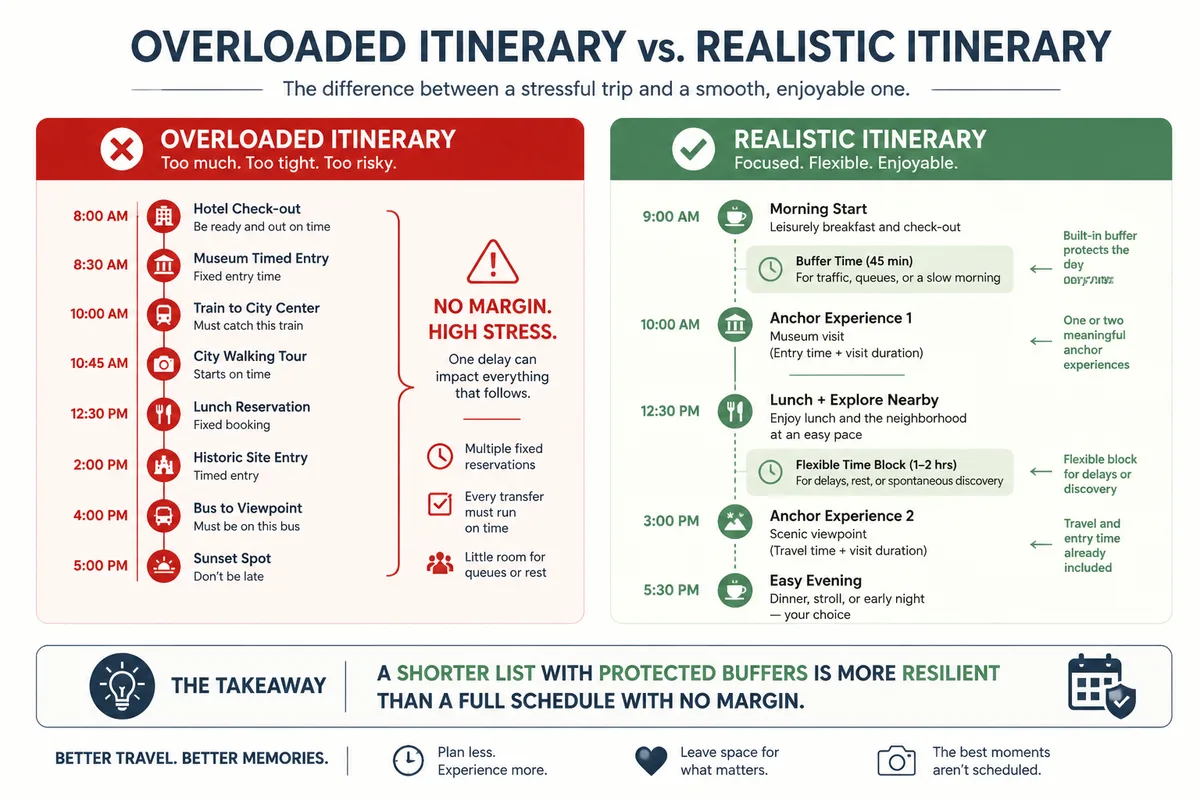
Choose a limited number of anchor experiences and treat the remaining time as flexible. A realistic itinerary protects the reservations that matter without turning every open hour into a deadline.
Calculate door-to-door travel time, not journey time
The published journey duration is only one part of the move. Add check-out, the transfer to the airport or station, security, immigration, baggage collection, station navigation, queues, and accommodation check-in.
Self-transfers require extra caution because separate tickets may not protect the next leg. An airport change, terminal change, or immigration process can add complexity that is invisible in a simple route planner.
Leave buffers where they matter most
Protect arrival days, connection days, event reservations, and departures with realistic margins. After a long journey, a lighter half-day is usually more practical than a fixed appointment soon after landing.
Do not book a non-refundable activity immediately after a complex arrival. If the event is essential, consider arriving the previous day or choosing a cancellation option that matches the level of uncertainty.
Mistake 3: Booking the cheapest option without comparing the full trade-off
The lowest upfront price is not necessarily the lowest trip cost. Location, transfer time, baggage rules, arrival hours, cancellation conditions, and payment restrictions can change the value of a flight or hotel.
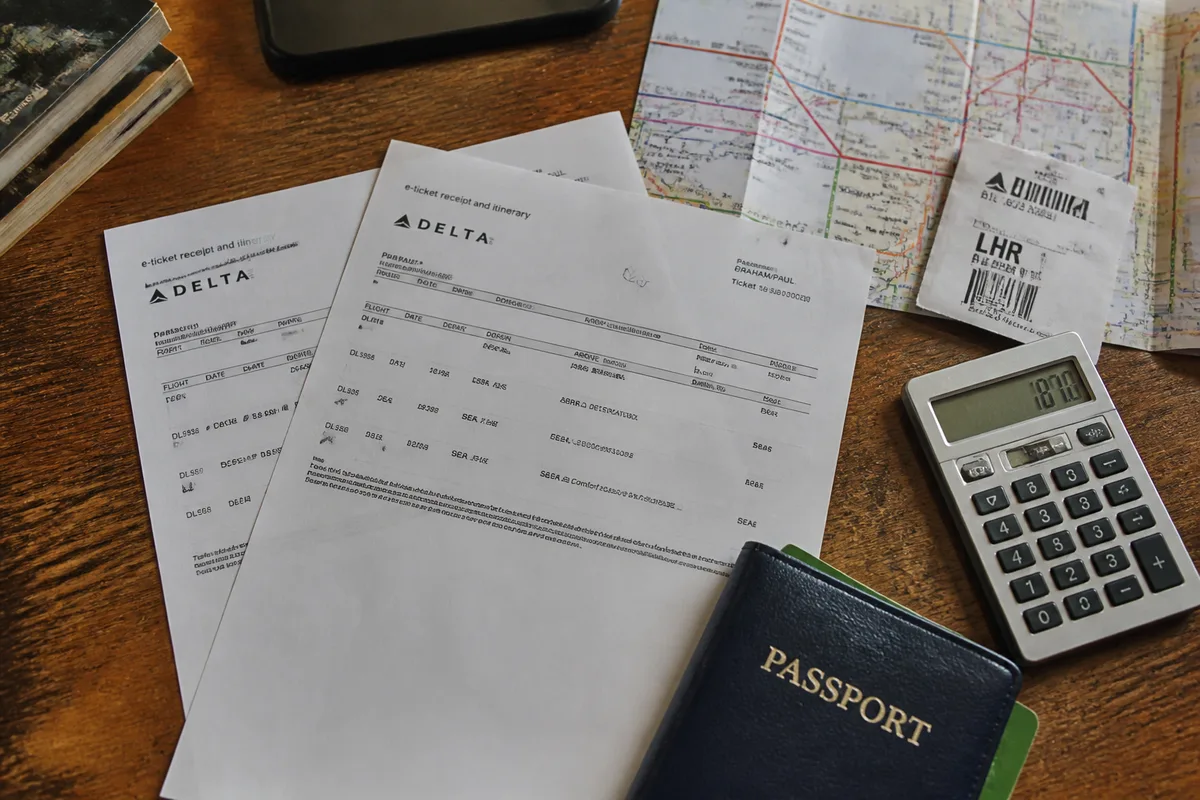
Compare total cost, total travel time, convenience, and change risk together. In this case, do not choose the cheapest headline price when it creates a longer transfer, an extra night, or a serious risk of losing the booking.
Flights: look beyond the fare
Compare the airport location, baggage allowance, seat conditions, arrival time, transfer cost, connection protection, and fare rules. A late arrival at a distant airport can require a more expensive transfer or an additional night near the airport.
A protected connection and a self-transfer are not equivalent. With separate tickets, you may need to collect baggage, pass immigration, change terminals, and check in again before the next carrier’s deadline.
Accommodation: compare the stay, not the nightly rate
Check taxes, mandatory fees, breakfast, luggage storage, transport access, cancellation terms, and the practical cost of the location. A cheaper property may create longer and more expensive journeys every day.
Compare the final stay total and the number of usable hours, not only the nightly rate. A modest difference in accommodation price can be reasonable if it removes repeated transfers and late-night arrival complications.
Flexible versus non-refundable bookings
Read the cancellation deadline, change fees, credit conditions, exclusions, and payment schedule before confirming. Flexibility can be worth paying for when dates, connections, weather, or entry approval remain uncertain.
Do not assume that a credit covers every change or that travel insurance reimburses every cancellation. The booking terms and policy wording decide what is actually recoverable.
Mistake 4: Treating documents, entry rules, and local conditions as last-minute details
Passport validity, visa or electronic authorization rules, transit conditions, health documentation, onward-travel evidence, and driving requirements depend on nationality, route, and destination. Check them before paying for non-refundable travel.
Use current government, embassy, airline, airport, and transport-provider information. Social posts and old reviews may suggest useful questions, but they should not confirm a critical entry or transport requirement.
Requirements to verify before booking
- Passport validity and blank-page requirements, as specified for your nationality and destination.
- Visa or electronic travel authorization requirements.
- Transit rules for every country where you change planes or cross a border.
- Health documentation or vaccination information where officially required.
- Proof of onward travel, accommodation, or funds if the relevant authority requires it.
- Driving licence, international permit, insurance, and age conditions for car rental.
Save the official page and the date you checked it. Recheck shortly before departure because entry systems, airline documentation checks, and transit rules can change.
Seasonality, events, and service changes
School holidays, festivals, major events, weather patterns, closures, reduced seasonal services, and peak-demand periods can alter both price and availability. Outdoor-heavy itineraries should include an indoor or lower-risk alternative that does not depend on one perfect weather day.
Mistake 5: Underplanning local transportation and arrival logistics
The first transfer often determines whether the first day feels manageable or expensive. Before departure, check operating hours, payment methods, luggage rules, reservations, accessibility, and a backup route for the airport, station, or port.
Save official transport information and key addresses offline. This matters especially when mobile coverage, roaming, battery life, or late-night service is uncertain.
Avoid tight connections and unsupported self-transfers
A protected connection is arranged under one booking or a specific carrier agreement, while separate tickets leave you responsible for the next departure. Account for baggage collection, terminal changes, immigration, security, and delays before deciding that a connection is realistic.
If the second ticket cannot be changed and the first journey is delayed, the apparent saving may disappear immediately. Choose a longer margin when replacing the missed leg would be expensive or difficult.
Plan the first and last mile before you land
Confirm how to reach the accommodation at the actual arrival time, including late-night and early-morning options. Record the approximate fare, ticketing method, pickup location, and fallback option if the primary service is unavailable.
Do the same for the return journey. A hotel that is easy to reach on arrival may still require an early transfer that does not operate at the time of departure.
Mistake 6: Having no protection or backup when plans change
Travel insurance is not interchangeable across providers or policies. Review medical cover, cancellation, interruption, delay, baggage, activity exclusions, limits, deductibles, and pre-existing-condition rules before assuming you are protected.
Backups should also cover payments, communication, documents, and important reservations. Keep the level of preparation proportionate to the trip cost, destination, activities, and personal circumstances.
Read travel insurance coverage and exclusions
Check whether the policy covers the activities you intend to undertake and whether reimbursement requires specific evidence, deadlines, or prior authorization. Do not assume that insurance linked to a payment card provides the same cover as a dedicated policy.
The policy wording, not the summary label, determines the limits and exclusions. For a costly or complex trip, compare the wording before paying for non-refundable arrangements.
Create a simple offline backup kit
Securely store copies of passports, confirmations, insurance contacts, accommodation addresses, emergency contacts, and key tickets offline. Keep more than one payment method and a communication fallback where appropriate.
A backup does not need to be elaborate. A protected digital folder and a small paper record of essential addresses can be useful when a device fails or internet access disappears.
A three-check system to avoid common vacation planning mistakes
A three-stage review catches most preventable errors without turning planning into a full-time task. Check the conditions before booking, the transaction details before paying, and the live arrangements during the week before departure.
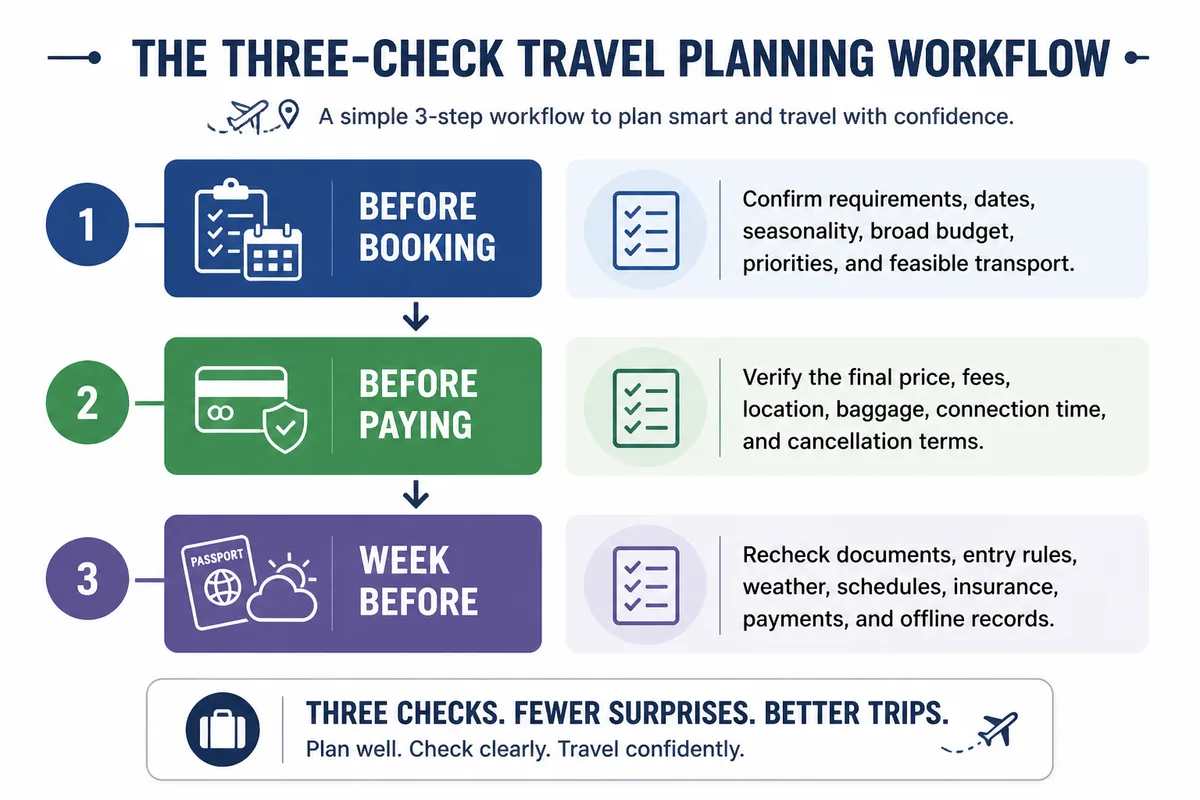
Check 1: Before booking
- Confirm destination requirements for your nationality, route, and planned activities.
- Check realistic dates, seasonality, broad costs, and feasible transport options.
- Identify the main priorities before adding extra destinations or fixed activities.
- Decide which parts must be fixed and which blocks should remain flexible.
Check 2: Before paying
- Open the final checkout page and record the complete price.
- Verify the airport, station, dates, passenger names, baggage rules, and accommodation address.
- Calculate transfer time and cost, including arrival and departure logistics.
- Read cancellation, change, credit, and refund conditions.
- Recalculate the overall budget after the reservation.
Check 3: In the week before departure
- Reconfirm passport, entry rules, transit requirements, and health information through official sources.
- Check weather, transport schedules, closures, event times, and accommodation instructions.
- Review insurance contacts, payment methods, emergency contacts, and offline records.
- Make sure the itinerary still contains buffers and workable alternatives.
A smoother, more affordable trip comes from checking total costs and real travel times early, then protecting the plan with enough flexibility to handle what cannot be predicted.
Frequently Asked Questions
The most useful way to prevent travel planning errors is to prioritize decisions that are expensive, time-sensitive, or difficult to reverse. Use official sources for current requirements, compare complete booking costs, and preserve enough time and money to handle ordinary disruption.
What is the biggest mistake people make when planning a trip?
One of the costliest mistakes is treating the advertised price or journey duration as the complete picture. A total budget and door-to-door timetable reveal problems before payment.
How can I avoid hidden travel costs?
Review the final checkout total for flights, accommodation, transfers, and activities. Check baggage, taxes, cleaning fees, seat selection, booking fees, foreign transaction charges, and exchange-rate markups before confirming.
How much free time should I leave in a travel itinerary?
There is no universal number because the right margin depends on the destination, transport, trip length, and fixed reservations. Leave extra space on arrival, connection, event, and departure days, and avoid filling every open hour.
When should I check passport, visa, and transit requirements?
Check them before booking non-refundable travel and verify them again shortly before departure. Use official government, embassy, airline, airport, and transport-provider sources because requirements depend on nationality and route.
Is flexible booking worth the extra cost?
It can be worthwhile when dates, connections, weather, or entry approval are uncertain. Compare the flexibility fee with the amount you could lose under a non-refundable booking, and read the exact cancellation and change conditions.
How can I avoid booking a flight or hotel that becomes expensive later?
Compare the final cost, location, transfer time, baggage, taxes, arrival conditions, and cancellation terms. A low headline price is a poor choice when it creates costly transfers, an extra night, or a high risk of losing the reservation.