When Is the Best Month to Start a Garden? A Seasonal Planning Guide for Every Climate
When Is the Best Month to Start a Garden? A Seasonal Planning Guide for Every Climate
The best month to start a garden depends on your local frost dates, soil conditions, climate, and crops. In many temperate regions, late winter is suitable for planning and indoor seed starting, while early spring works for cool-season vegetables. Warm-season crops usually belong outdoors after the final spring frost and once soil and nighttime temperatures are warm enough.
This guide separates garden planning, indoor sowing, direct outdoor planting, transplanting, and seasonal maintenance. It explains how to use a hardiness zone, last frost date, first frost date, soil temperature, and crop requirements instead of relying on one nationwide calendar.
Quick Summary
🌱 Late winter is often the right time to plan a garden, order seeds, prepare supplies, and start slow-growing plants indoors.
❄️ Cool-season crops can often be sown before the final spring frost when the soil is workable and temporary protection is available.
☀️ Tomatoes, peppers, cucumbers, beans, squash, and basil usually need warmer conditions and should wait until frost risk has passed.
📅 A personal planting schedule works better than a fixed month because elevation, coastal exposure, urban heat, soil, and crop maturity all change timing.
What Is the Best Month to Start a Garden in Your Climate?
The best month to start a garden is the month when your first practical task matches local conditions, not a universal date. Garden planning can begin during late winter, cool-season sowing may start in early spring, and warm-season transplanting generally follows the last spring frost. The crop list and local weather determine the correct sequence.
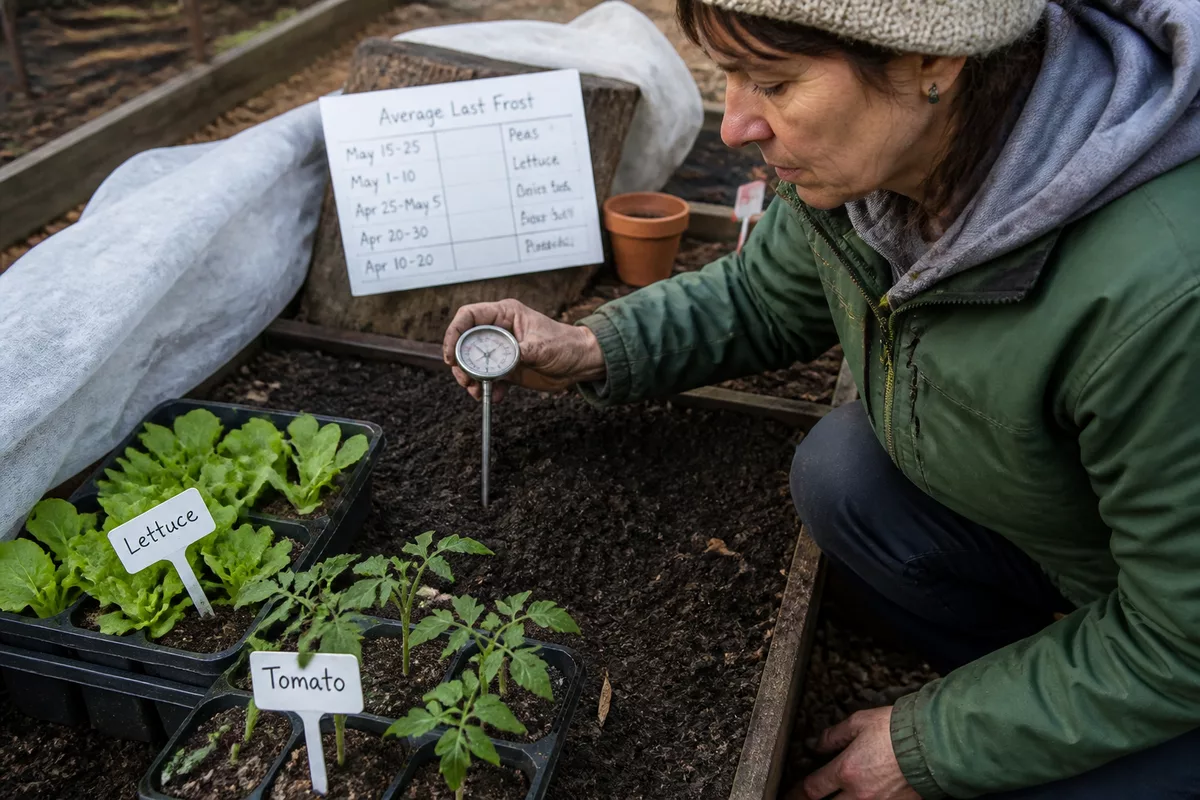
“Starting a garden” can mean three different actions. Planning involves choosing crops, mapping beds, ordering seeds, and checking tools. Indoor seed starting means raising seedlings in a protected space before outdoor conditions are suitable. Outdoor planting means sowing or transplanting directly into garden soil, containers, or raised beds.
The best month to start a garden is a decision based on local frost risk and crop temperature needs, not a fixed date on the calendar.
A last spring frost date estimates when freezing temperatures are likely to become less common in spring. A first fall frost date estimates when freezing conditions may return in autumn. Historical dates are useful planning references, but they are not guarantees for a specific year.
Use Your Hardiness Zone as a Starting Point, Not a Complete Planting Schedule
A hardiness zone is a climate classification based mainly on average annual extreme minimum winter temperatures. The United States Department of Agriculture provides a plant hardiness zone map that helps gardeners choose plants likely to tolerate local winter conditions, but the map does not provide a complete vegetable planting calendar.
Elevation can make a garden colder than a nearby town at the same latitude. Coastal exposure can moderate temperatures, while inland locations may heat and cool more quickly. Slopes, low-lying areas, buildings, pavement, wind, and urban heat can also create microclimates that shift planting conditions within the same zone.
Use your zone together with local extension guidance, recent weather forecasts, seed-packet instructions, and actual soil conditions. A gardening zone planting guide can narrow the options, but local frost data and crop-specific instructions decide whether planting is sensible this week.
Understand Your Last and First Frost Dates
The last spring frost date helps you plan cold-sensitive transplants and the first outdoor sowings of tender crops. The first fall frost date helps you decide when to sow a fall vegetable garden, protect tender plants, or harvest crops before freezing weather returns.
Frost dates are probability-based estimates rather than promises. A forecast that shows a late freeze can still override a calendar schedule, especially in open gardens, low areas, and exposed sites. Keep frost cloth or another temporary cover ready when planting tender seedlings near the edge of the expected frost window.
Match the Planting Month to the Crop
A cool-season crop is a plant that grows in lower spring or fall temperatures and may tolerate a light frost. Lettuce, spinach, peas, carrots, kale, onions, radishes, and broccoli are common examples. A warm-season crop needs warmer soil and air and is more vulnerable to cold damage; tomatoes, peppers, cucumbers, squash, beans, and basil fit this group.
Soil temperature matters because seeds need suitable conditions to germinate, and nighttime temperatures matter because tender plants can be damaged even when daytime conditions feel warm. Seed packets often provide crop-specific temperature, depth, spacing, and timing information that is more useful than a generic month.
When Should You Start a Garden by Season?
Seasonal gardening works best when tasks follow temperature and frost conditions rather than rigid nationwide dates. Late winter is generally suited to planning and selected indoor sowing. Early spring favors cool-season crops, late spring supports warm-season planting after frost, summer allows succession sowing, and fall uses the remaining time before the first frost.
The same month can represent different stages in different climates. March may be a direct-sowing month in one region and an indoor seed-starting month in another. A month-by-month plan should therefore be treated as a framework that you adjust using local frost dates, soil workability, and crop maturity information.
Late Winter: Plan the Garden and Start Long-Season Seeds
Late winter is a useful starting point for garden planning because it gives you time to choose crops, map beds, order seeds, and check containers, lights, labels, and watering equipment. Long-season vegetables, herbs, and flowers may be started indoors when the available growing season is too short for direct outdoor sowing.
Indoor seedlings need sufficient light, controlled moisture, airflow, and enough container space. Insufficient light can produce weak, stretched seedlings, while persistently wet growing media can damage roots. Seed packets and local extension recommendations should determine when a crop belongs indoors rather than outdoors.
Early Spring: Sow Cool-Season Vegetables
Early spring is often appropriate for lettuce, spinach, peas, radishes, carrots, onions, kale, and other locally suitable cool-season crops. Direct sowing should wait until the soil is workable rather than sticky, waterlogged, or frozen.
Frost cloth and cloches can provide temporary protection during cold nights, but covers need to be secured against wind and removed or ventilated when conditions become warm. Protection extends the practical planting window; it does not make a frost-sensitive tomato plant cold-hardy.
Late Spring: Plant Warm-Season Crops After Frost
Tomatoes, peppers, cucumbers, squash, beans, and basil generally perform better after the danger of frost has passed and the soil has warmed. Seedlings should be acclimated gradually to outdoor light and wind before permanent transplanting.
Late-spring preparation also includes installing supports, checking irrigation, planning spacing, and applying suitable mulch after the soil has warmed. Crowded plants dry unevenly, develop more airflow problems, and become harder to inspect for pests or disease.
Summer: Extend Harvests With Succession Planting
Succession planting means sowing the same crop or a replacement crop at intervals instead of planting the entire supply at once. Quick-growing greens, radishes, beans, and heat-tolerant crops may fit a summer succession plan when the remaining season is long enough.
Summer maintenance shifts toward moisture management, heat protection, harvest timing, and pest monitoring. Mulch can reduce evaporation, while shade cloth or afternoon shade may help some leafy crops during heat. Check the maturity period on the seed packet before sowing a crop late in the season.
Fall: Use the First Frost Date to Plan a Second Growing Season
Fall planting begins by counting backward from the expected first frost date. Choose crops that can mature before that date or tolerate cool conditions, such as kale, broccoli, carrots, beets, lettuce, and radishes.
Some crops can remain productive after light frost, while others need covers or timely harvesting. A fall plan should include protection materials, expected days to maturity, and a realistic allowance for shorter days and slower growth as autumn advances.
A Month-by-Month Garden Planting Calendar
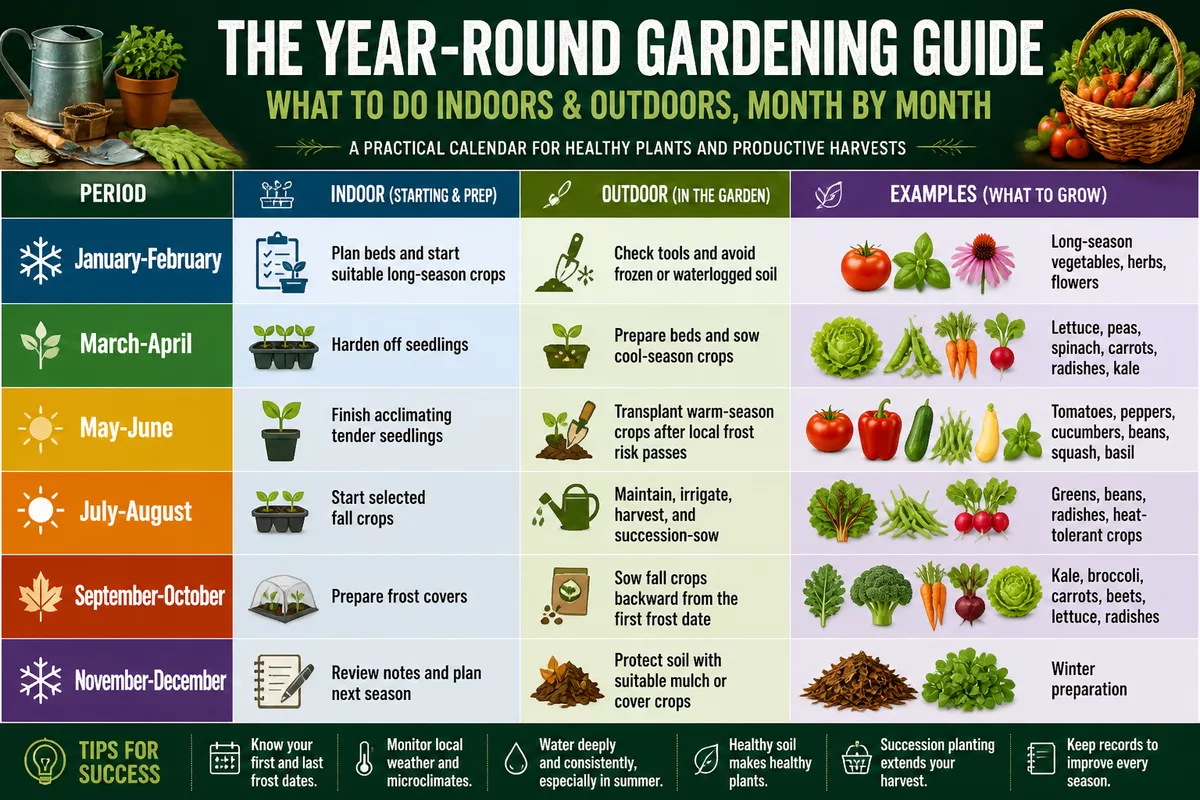
A vegetable planting calendar is most useful when it separates indoor preparation, outdoor sowing, transplanting, harvesting, and winter preparation. The calendar below offers a flexible framework for temperate climates; local frost dates, hardiness zones, soil conditions, and crop instructions must determine the final timing.
| Period | Indoor preparation | Outdoor work | Crop examples |
|---|---|---|---|
| January–February | Plan beds, order seeds, start suitable long-season crops | Check tools and avoid working frozen or waterlogged soil | Long-season vegetables, herbs, flowers |
| March–April | Harden off seedlings when outdoor conditions allow | Prepare beds and sow cool-season crops when soil is workable | Lettuce, peas, spinach, carrots, radishes, kale |
| May–June | Finish acclimating tender seedlings | Transplant warm-season crops after local frost risk has passed | Tomatoes, peppers, cucumbers, beans, squash, basil |
| July–August | Start selected fall crops according to local timing | Maintain, irrigate, shade, harvest, and succession-sow | Greens, beans, radishes, heat-tolerant crops |
| September–October | Protect tender plants and prepare covers | Sow fall crops backward from the first frost date | Kale, broccoli, carrots, beets, lettuce, radishes |
| November–December | Review notes and plan next season | Remove diseased material and protect soil with suitable mulch or cover crops | Winter preparations and cool-season protection |
January and February: Prepare and Start Seeds Indoors
January and February are often planning months rather than outdoor planting months. Review the length of your local growing season, choose crops suited to the available space, sketch bed layouts, and check whether your indoor growing area provides enough light and airflow.
Long-season flowers and vegetables can be started indoors when the crop instructions and local frost timing support that approach. Starting every crop indoors is unnecessary; some plants grow better when sown directly into their final location.
March and April: Prepare Beds and Sow Cool-Season Crops
March and April can support spring garden planting in regions where the soil is no longer frozen and can be worked without sticking to tools. Soil that is too wet can compact under foot traffic, reducing pore space and making later root growth more difficult.
Direct-sow suitable cool-season vegetables, then harden off indoor seedlings gradually as outdoor light and temperatures permit. Flower timing also varies by species: hardy annuals may tolerate cool conditions, while tender flowers usually need warmer soil and protection.
May and June: Transplant Warm-Season Crops
May and June are common transplanting months for tomatoes, peppers, cucumbers, squash, beans, basil, and other tender crops in many temperate locations. The correct date still depends on the local last frost date, soil temperature, nighttime conditions, and the crop label.
Install supports before plants become large, water the root zone thoroughly after transplanting, and use temporary protection if cold or strong wind remains possible. A small garden can also be easier to manage when the first planting includes only a few reliable crops.
July and August: Maintain and Replant
July and August are not automatically too late to start a garden. Some crops can still mature if their days to maturity fit the remaining growing season, while others are better replaced with fast-growing greens or fall crops.
Monitor watering, bolting, heat stress, pests, and shade requirements. A small-space garden can make this stage easier by concentrating irrigation and maintenance in containers, raised beds, or compact growing areas; practical small-space garden ideas can help match crop volume to available time.
September and October: Sow Fall Crops and Protect Plants
Schedule fall sowings by counting backward from the first expected frost date and allowing extra time for slower autumn growth. Harvest mature crops before damaging freezes, and prepare covers for plants that may continue producing in cool weather.
Fall is also a useful time to inspect soil structure, remove diseased plant material responsibly, and decide which healthy organic matter can remain. Do not leave diseased material in place merely to create mulch, because it may help carry problems into the following season.
November and December: Close the Season and Review the Plan
Late autumn and winter are suitable for reviewing planting dates, frost timing, crop performance, watering demands, and harvest results. Written notes turn a general gardening zone planting guide into a more accurate schedule for your own site.
Protect exposed soil with suitable mulch or cover crops where appropriate, while keeping perennial plants and local habitat needs in mind. A simple review can reveal that a crop failed because of timing, spacing, moisture, light, or maintenance rather than because the variety was unsuitable.
How Can You Tell Whether Your Garden Is Ready for Planting?
A garden is ready for planting when the local forecast, soil condition, temperature, light, and crop requirements agree. The calendar alone is not enough. Check for workable soil, review frost risk, measure soil temperature when warmth matters, confirm sunlight, and prepare protection before moving tender plants outdoors.
Start with the weather forecast rather than assuming that a typical date guarantees safe conditions. The National Weather Service and local weather services can help identify short-term frost risk, while seed packets and local extension services provide crop-specific planting information.
- Check the local frost forecast for the next several nights.
- Confirm that the soil is crumbly and not saturated or compacted.
- Measure or verify soil temperature for warmth-loving crops.
- Confirm that the planting site receives enough sunlight for the crop.
- Read seed packets and transplant labels for spacing and timing.
- Prepare frost cloth, cloches, or another temporary cover before planting tender crops.
Sunlight requirements vary by crop, so a bright-looking location is not automatically suitable for every vegetable or flower. Record shaded periods caused by buildings, fences, trees, and seasonal changes before committing the entire bed to a crop that needs long daily exposure.
When Do Raised Beds and Containers Change the Timing?
Raised beds and containers can warm and drain differently from in-ground soil, which may make early-season work more practical in some locations. Faster warming does not remove frost risk, and containers can lose moisture more quickly than garden soil during warm or windy weather.
Inspect the root zone instead of relying on the container surface. A small container may feel dry at the top while remaining wet below, or it may dry rapidly after a sunny afternoon. Raised beds also need protection from cold nights when they contain tender transplants.
Should You Start Seeds Indoors or Plant Directly Outdoors?
Indoor seed starting suits slow-growing crops, short growing seasons, and gardeners who can provide adequate light, airflow, moisture control, and container space. Direct sowing suits root crops, many quick-growing vegetables, and plants that dislike root disturbance. The right method depends on the crop, climate, available space, and transplant tolerance.
Indoor growing can extend the usable season, but it adds work and creates a transition between protected conditions and outdoor weather. Direct sowing reduces transplant shock and simplifies the process, yet it requires suitable soil, temperature, moisture, and protection at the planting site.
When Starting Seeds Indoors Makes Sense
Starting seeds indoors is useful for slow-maturing vegetables, herbs, and flowers that need more time than your outdoor season provides. Indoor sowing can also help gardeners wait for cold soil to warm while seedlings develop under controlled conditions.
Indoor seedlings need strong enough light to remain compact, regular airflow to reduce stagnant humidity, and careful watering. Crowded trays, weak light, and saturated growing media can produce fragile plants that struggle after transplanting.
When Direct Sowing Is the Better Option
Direct sowing is often preferable for carrots, radishes, peas, beans, and other crops that grow quickly or develop roots that do not transplant easily. The final bed must still meet the crop’s depth, spacing, moisture, and soil-temperature requirements.
Direct sowing can also simplify a late-start garden because the plant avoids the indoor-to-outdoor transition. The remaining growing season must be long enough for the crop to mature before the first fall frost or before unsuitable heat arrives.
How to Transplant Seedlings Successfully
Hardening off means gradually exposing indoor-grown seedlings to outdoor light, wind, and temperature changes over several days. A sudden move from a protected room to direct sun can stress foliage and roots even when the air temperature appears acceptable.
- Move seedlings outdoors for a short period in a sheltered, shaded location.
- Increase outdoor exposure gradually while avoiding harsh wind or intense midday sun.
- Transplant during mild weather when the soil is workable and the plants are well watered.
- Water thoroughly around the root zone and follow the crop-specific spacing instructions.
- Use temporary protection if cold nights, wind, or strong sun could damage the seedlings.
What Planting-Timing Mistakes Should You Avoid?
Most first-time gardening problems begin with a mismatch between the crop and the conditions rather than with a lack of effort. Avoid planting by calendar date alone, ignoring night temperatures, disturbing wet soil, or growing more plants than you can water and inspect.
- Planting warm-season crops before frost risk has passed: tomatoes, peppers, basil, and similar plants can be damaged by cold.
- Ignoring soil temperature: warm-air afternoons do not guarantee warm soil for seeds or roots.
- Following a generic calendar without local data: elevation, exposure, microclimate, and frost dates can shift the schedule.
- Working waterlogged soil: foot traffic and tools can create compaction that limits drainage and root growth.
- Skipping hardening off: indoor-grown seedlings may suffer when moved abruptly into outdoor light and wind.
- Overcrowding plants: insufficient spacing increases competition and makes watering, harvesting, and inspection harder.
- Using unverified pesticide practices: unsuitable products can harm beneficial insects, soil life, people, pets, or local ecosystems.
Late planting is not automatically a failure, but every crop needs enough time to mature under the conditions it prefers. Check days to maturity, remaining frost-free time, and seasonal temperature before replacing a failed crop or filling an empty bed.
Protecting a garden starts with choosing a crop that fits the remaining season, not with trying to force every crop into the same planting window.
How Can You Build Your Personal Garden Planting Schedule?
A personal planting schedule combines local frost dates, growing-zone information, crop temperature needs, days to maturity, and the actual condition of your garden. The schedule should remain flexible because weather can shift from year to year, and the same crop may need different timing in a raised bed, container, valley, or exposed field.
Begin with a short crop list rather than filling every available space. A manageable plan combines a few direct-sown crops with a small number of transplants, then records planting dates, weather, maintenance demands, pest issues, and harvest results.
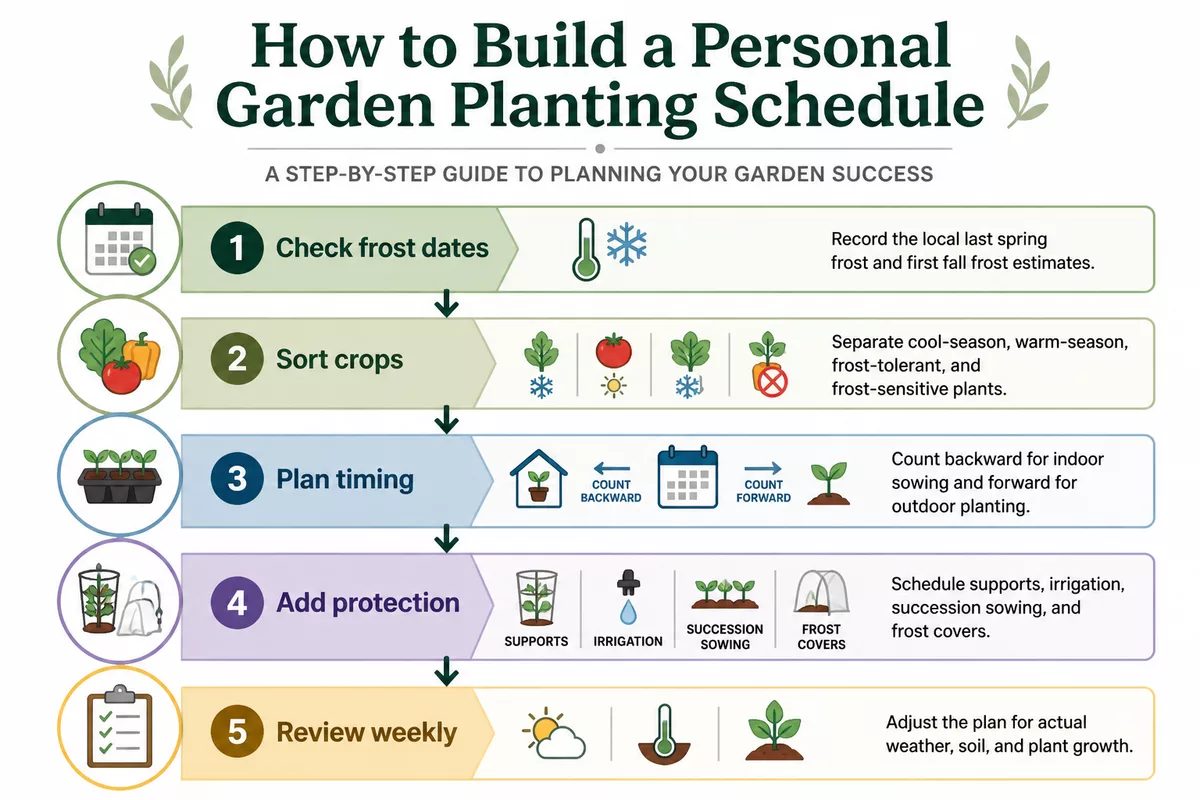
A Five-Step Planning Method
- Identify the local conditions: record your hardiness zone, last spring frost estimate, first fall frost estimate, elevation, and major microclimate features.
- Sort the crop list: separate cool-season, warm-season, frost-tolerant, and frost-sensitive plants.
- Calculate the sequence: count backward for indoor seed starting and forward for direct sowing or transplanting.
- Add practical tasks: include succession sowings, harvest windows, supports, irrigation, mulch, and frost protection.
- Review weekly: adjust the schedule according to the forecast, soil condition, plant growth, and available maintenance time.
A Practical Starter Plan for Beginners
A beginner-friendly garden can start with a small number of crops that match the local climate and available time. For example, a gardener might combine direct-sown radishes and peas with lettuce, kale, or a few tomato transplants rather than starting a large collection of demanding crops.
Record the date of each sowing, the weather around planting, watering frequency, pest observations, and harvest results. Notes from one season become site-specific evidence that improves the next schedule more reliably than a generic calendar alone.
Garden planning can also include the wider use of outdoor space, such as compact beds, patio containers, or ornamental areas. For readers interested in the cultural meaning of domestic outdoor spaces, the history and current meaning of House and Garden today offers a separate perspective from the practical planting guidance here.
Key Points
- 🌱 Choose the planting month from local frost dates, soil readiness, and crop temperature needs.
- ❄️ Sow cool-season crops earlier, but protect them when freezing weather remains possible.
- ☀️ Wait for suitable soil and nighttime temperatures before planting tender warm-season crops.
- 📅 Use a flexible schedule that includes indoor sowing, direct planting, transplanting, succession crops, and fall protection.
Frequently Asked Questions
What is the best month to start a garden?
There is no single best month for every location or crop. Late winter often suits planning and indoor seed starting, early spring suits cool-season crops, and late spring usually suits tender warm-season planting after local frost risk has passed.
Can I start a garden before the last frost?
Yes, many cool-season crops can be started before the last spring frost when the soil is workable and local conditions support growth. Tender crops are usually safer indoors or under temporary protection until freezing weather is unlikely.
When should I plant tomatoes and peppers?
Plant tomatoes and peppers outdoors after the local frost danger has passed and soil and nighttime temperatures are warm enough for active growth. The correct timing depends on local conditions rather than one fixed calendar month.
What can I plant in early spring?
Early spring may suit lettuce, spinach, peas, radishes, carrots, onions, kale, and other locally suitable cool-season crops. Soil workability, short-term weather, and the instructions on the seed packet still determine the safest timing.
Should I start seeds indoors or outdoors?
Start seeds indoors when a crop grows slowly, the outdoor season is short, or outdoor soil is not yet suitable. Direct-sow root crops and many fast-growing vegetables when the crop tolerates transplanting poorly or can germinate reliably in the garden.
How do I protect plants from a late frost?
Use frost cloth, cloches, temporary covers, or containers that can be moved to shelter. Secure covers against wind, avoid letting unsuitable material press on foliage, and remove protection when daytime temperatures rise enough to cause overheating.